Discover Spain and Portugal with Caravan Tours. Explore the Alhambra, Lisbon, Seville, Barcelona, Toledo, and more.

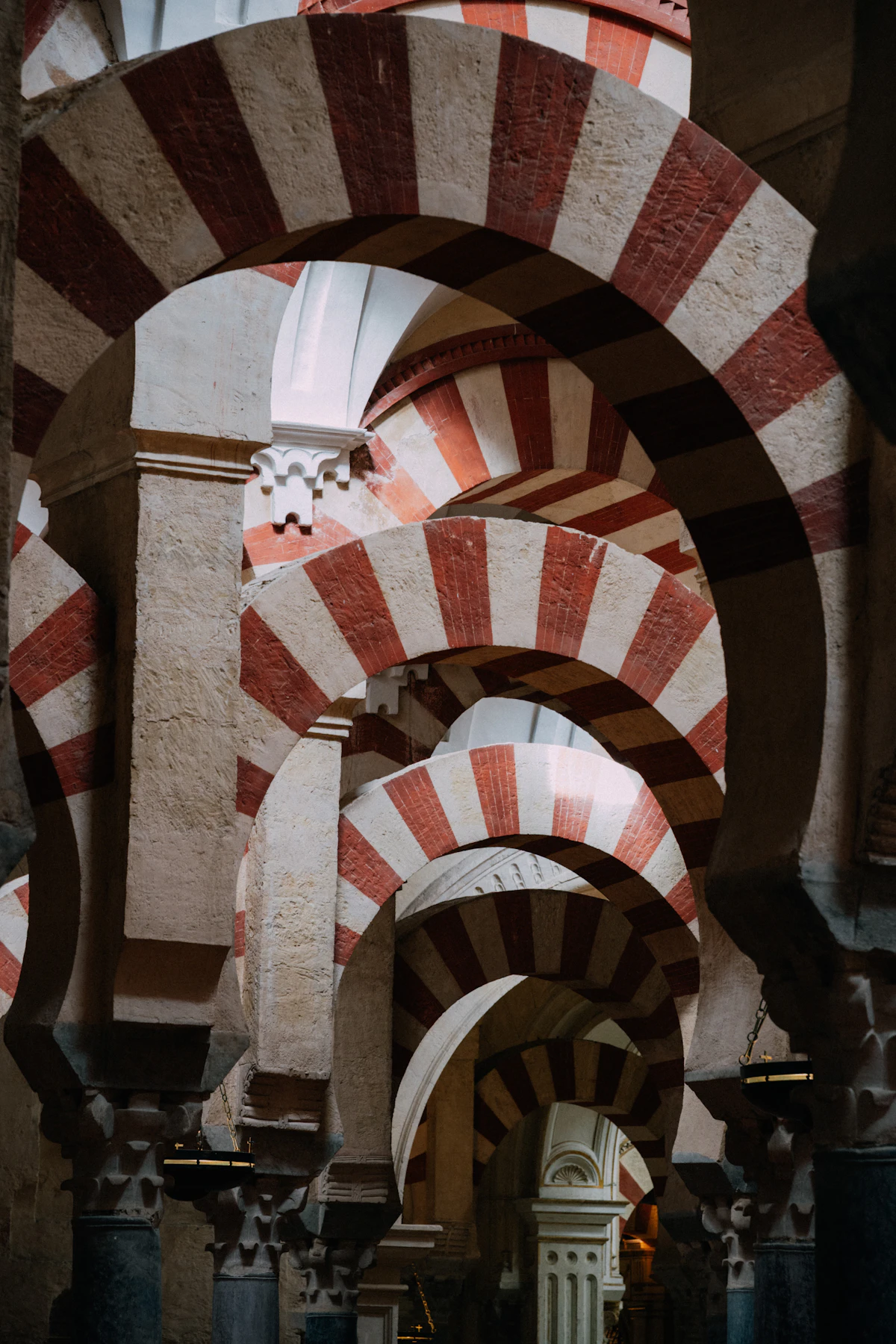
The iconic red and white horseshoe arches and marble columns inside the Mosque-Cathedral of Cordoba

The first time you walk into the Mezquita of Córdoba, your brain takes a second to catch up with your eyes. You step through a heavy wooden door, and suddenly you’re standing in a forest of columns. Red and white double arches stretch in every direction, row after row, creating a visual rhythm that seems to go on forever. There are 856 columns in all, made from jasper, onyx, marble, and granite, many of them recycled from Roman temples and Visigothic churches.

And then, right in the middle of all that, you notice a full-blown Renaissance cathedral. Just sitting there. Inside the mosque. If that sounds architecturally insane, well, it is. But it’s also one of the most fascinating buildings in the world precisely because of that collision.

How a Mosque Became a Cathedral (and Kept Being Both)

Córdoba’s story starts in 711, when Moorish forces crossed the Strait of Gibraltar and swept through the Iberian Peninsula. By the 8th century, Córdoba was the capital of Al-Andalus and one of the largest, most advanced cities in Europe. At its peak in the 10th century, the city had a population of roughly 500,000, with paved streets, public lighting, running water, and hundreds of public baths. Paris, by comparison, was a muddy village of maybe 20,000.

The Great Mosque

Abd al-Rahman I began building the Great Mosque in 784 on the site of a Visigothic church (which itself had been built over a Roman temple). The double-tiered horseshoe arches, alternating red brick and white stone, were an engineering solution to a height problem. The columns recycled from earlier buildings were too short to create the soaring interior the architects wanted, so they stacked a second tier of arches on top. The result is one of the most recognizable architectural features in Islamic art.

The mosque was expanded three times over the next two centuries, each time growing larger and more elaborate. The mihrab, the prayer niche indicating the direction of Mecca, is a masterpiece of Byzantine-influenced mosaic work. Gold and colored glass tesserae cover the dome above it in intricate geometric and floral patterns. Caliph al-Hakam II reportedly requested the mosaics from the Byzantine emperor, who sent both materials and craftsmen to complete the work.

The Cathedral Insertion

When Ferdinand III of Castile captured Córdoba in 1236, the mosque was consecrated as a cathedral. For nearly 300 years, the Christians mostly left the structure alone, worshipping inside the existing space. Then, in the 16th century, the cathedral chapter decided to build a full Gothic and Renaissance cathedral nave right in the center of the mosque.

Even Charles V, the Holy Roman Emperor who approved the project, reportedly regretted it. When he visited Córdoba and saw the construction, he supposedly said, “You have destroyed something unique to build something commonplace.” Whether that quote is entirely accurate is debated, but the sentiment rings true. The cathedral is objectively beautiful, with soaring vaulted ceilings, elaborate choir stalls, and a stunning mahogany altarpiece. But surrounded by the Moorish arches on all sides, it feels intrusive. Two magnificent buildings occupying the same space, neither one quite complete because of the other.

That tension is exactly what makes the Mezquita so compelling. It’s not a resolved, harmonious space. It’s a building that contains a visible argument between civilizations, frozen in stone.

What to Look For Inside

The Hypostyle Hall
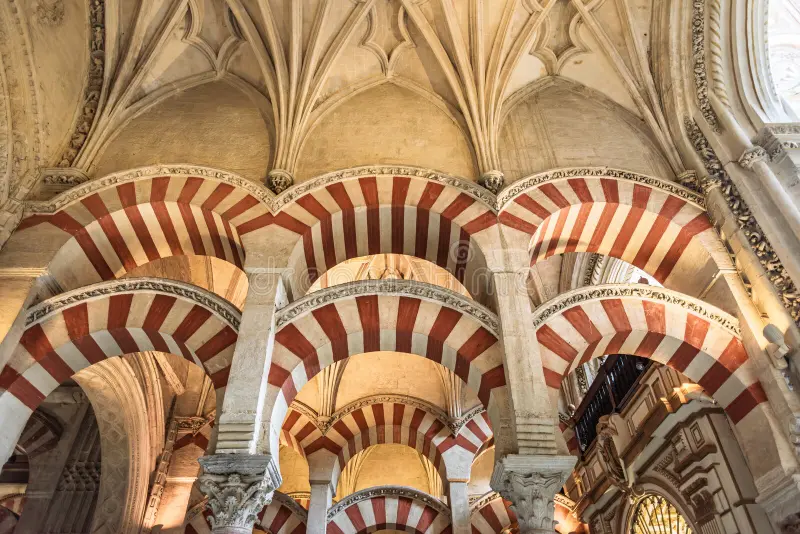
Rows of double-tiered arches stretching into the distance inside the Mezquita of Cordoba

Spend time in the older sections of the mosque, away from the cathedral insertion. Stand at one end and look down a row of columns. The arches create a perspective effect that seems to multiply them infinitely. The lighting is dim and warm, filtered through small openings and lanterns. In the original design, the south wall was open to the courtyard, letting in natural light and breeze. That wall has been closed since the Christian conversion, which changed the interior atmosphere dramatically. What was once a bright, airy prayer hall became something more mysterious and enclosed.

The Mihrab

The mihrab is at the far end of the al-Hakam II expansion and is the most ornamented section of the entire building. The horseshoe arch framing the entrance is covered in gold mosaic. Above it, an octagonal dome is constructed from interlocking ribs, a structural innovation that predated similar European Gothic techniques by several centuries. This wasn’t just decoration. Córdoba’s architects were solving real engineering problems in ways that wouldn’t become common in European architecture for another 300 years.
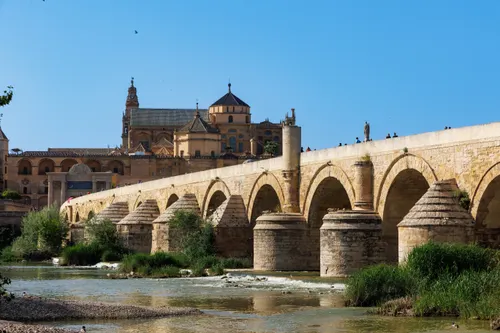
The Roman Bridge crossing the Guadalquivir River with the Mosque-Cathedral of Cordoba in the background

The Courtyard of the Orange Trees

Before entering, you’ll pass through the Patio de los Naranjos, a walled courtyard planted with orange trees in neat rows that mirror the column layout inside. In the mosque’s original design, this courtyard was part of the worship space, with the tree rows continuing the visual lines of the interior columns. Fountains for ritual washing still dot the courtyard.

Córdoba Beyond the Mosque

The city itself is worth exploring, even if you only have a few hours. The Judería (Jewish Quarter) is a web of whitewashed streets, flower-draped courtyards, and small plazas. The Calleja de las Flores, a narrow alley opening onto a small square with a view of the cathedral bell tower framed by hanging flower pots, is one of the most photographed spots in Andalusia for good reason.
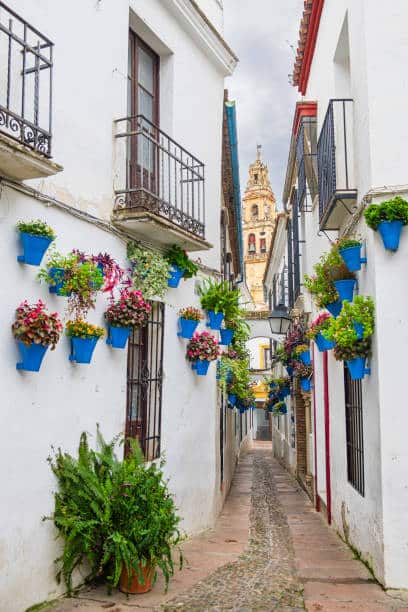
The charming Calleja de las Flores in Cordoba with flower pots and cathedral bell tower view

The Roman Bridge across the Guadalquivir River dates to the 1st century BC and offers a postcard view of the Mezquita from the south bank. The bridge was the only river crossing in Córdoba for nearly 2,000 years, and walking across it at sunset, with the mosque silhouetted against the sky, is one of those simple pleasures that costs nothing and stays with you.

Visiting with Caravan

On Caravan’s Spain and Portugal tour, Córdoba is visited on Day 6, on the route between Seville and Granada. The tour includes a guided visit to the Mosque-Cathedral with a professional tour director who can walk you through the layers of history in a way that brings the building to life. Context matters in a place like this. Without it, you see beautiful arches. With it, you see a thousand years of conquest, coexistence, and cultural collision encoded in every stone.

The full 14-day itinerary starts in Lisbon and ends in Barcelona, with all hotels, most meals, and guided activities included from $2,895. It’s one of Caravan’s most popular European routes, and the Córdoba stop is a consistent highlight.

Ready to walk through those 856 columns yourself? Visit caravan.com or call 1-800-CARAVAN to explore the tour.
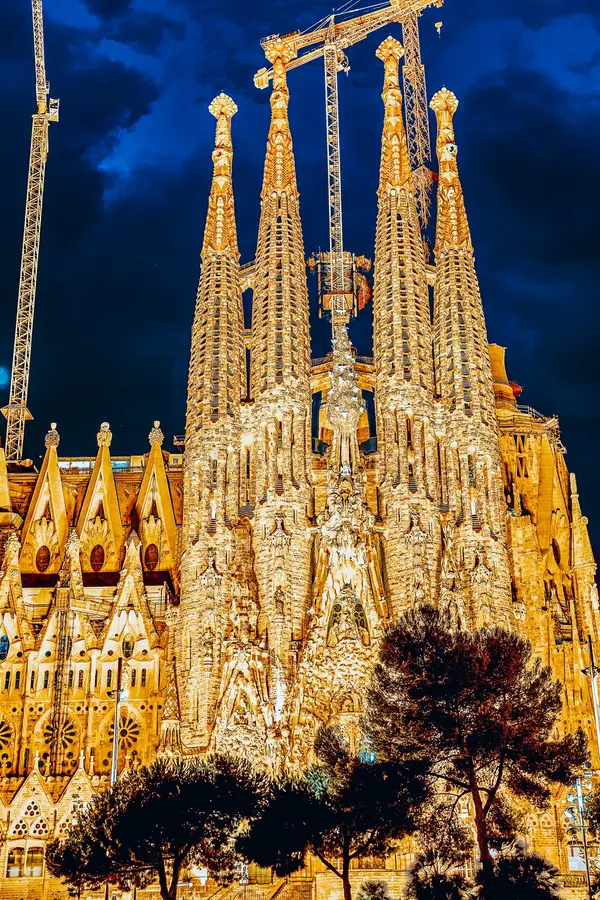
The towering Sagrada Familia basilica by Antoni Gaudi in Barcelona, Spain

Barcelona is one of those cities that everyone thinks they know. Beaches, Gaudí, sangria, football. And sure, all of that is real. But spend even a single full day here and you realize the city is denser, stranger, and more rewarding than its postcard version suggests. The architecture alone could keep you busy for a week, and the food scene has quietly become one of the best in Europe.

As the final stop on Caravan’s Spain and Portugal tour, Barcelona is a fitting exclamation point after two weeks crossing the Iberian Peninsula. You arrive having already seen Moorish palaces, Gothic cathedrals, and Roman ruins. Barcelona takes all of that history and adds a distinctly Catalan twist.

Gaudí: The Architect Who Broke Every Rule

Antoni Gaudí spent most of his career in Barcelona, and the city is essentially an open-air gallery of his work. His buildings don’t look like they were designed. They look like they grew, as if someone planted an idea in the ground and this is what came up.

Sagrada Família

The Basílica de la Sagrada Família is Gaudí’s unfinished masterpiece, under construction since 1882 and still not done. The target completion date is 2026, the centenary of Gaudí’s death, though timelines have shifted before.

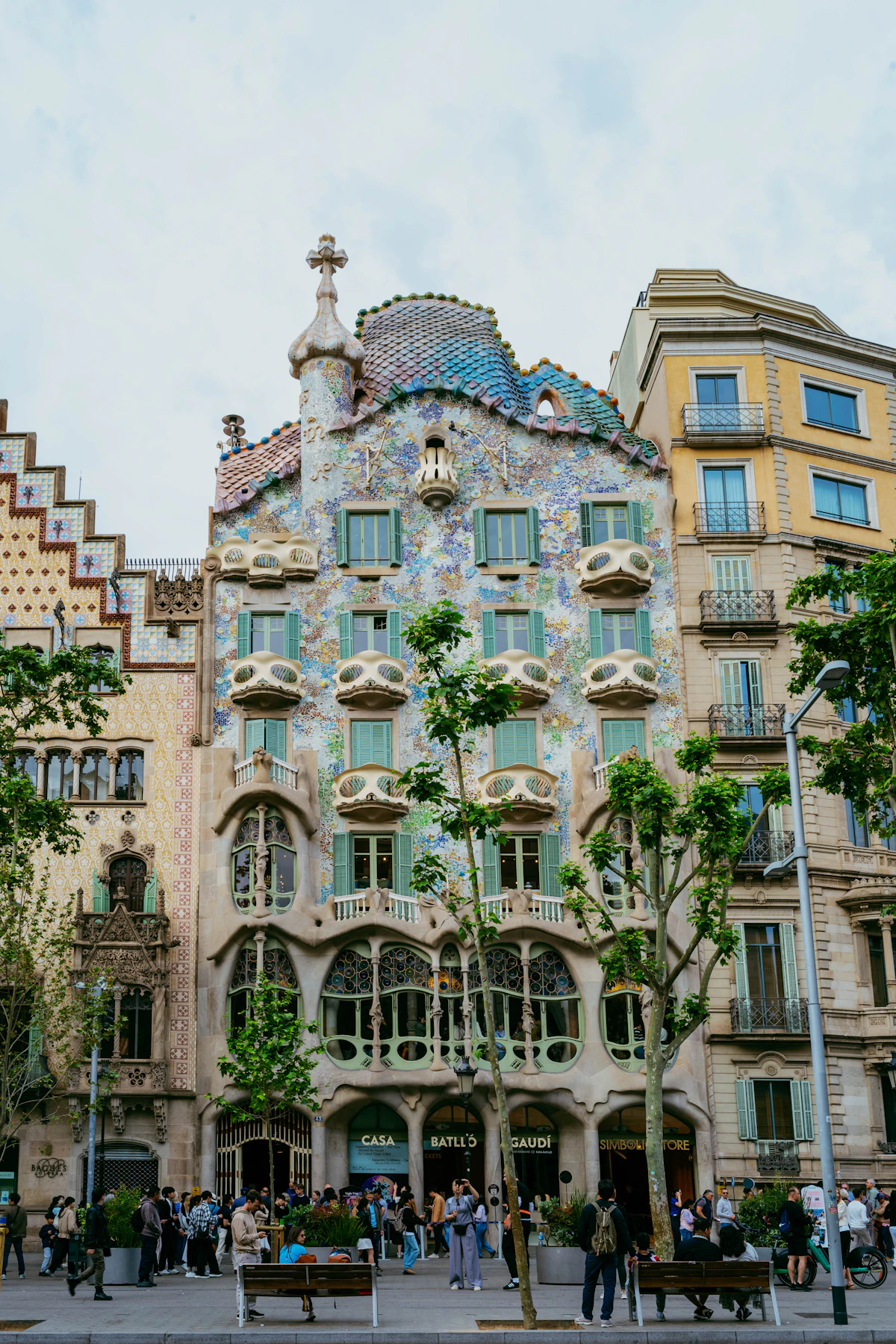
The colorful mosaic facade of Casa Batllo by Antoni Gaudi in Barcelona

From the outside, it’s overwhelming. The Nativity façade (the one Gaudí completed) is encrusted with stone figures, plants, and animals that seem to spill off the building. The Passion façade, finished later by sculptor Josep Maria Subirachs, is angular and stark by comparison.

Inside is where the Sagrada Família becomes something else entirely. Gaudí designed the interior columns to branch like trees, creating a canopy effect that turns the nave into a stone forest. Stained glass windows on the east side cast blue and green light in the morning; the west side glows orange and red in the afternoon. The effect is not subtle. It’s genuinely disorienting in the best way.

Casa Batlló

On the Passeig de Gràcia, Casa Batlló is Gaudí’s renovation of an 1877 apartment building. The façade is covered in broken ceramic tiles (trencadís) that shimmer in shades of blue and green. The roof is shaped like a dragon’s back, with tiles resembling scales and a cross-topped tower that’s said to represent Saint George’s lance. Inside, every surface curves. Door handles are molded to fit the human hand. Window frames undulate. Light wells are tiled in graduating shades of blue so that natural light distributes evenly from top to bottom.

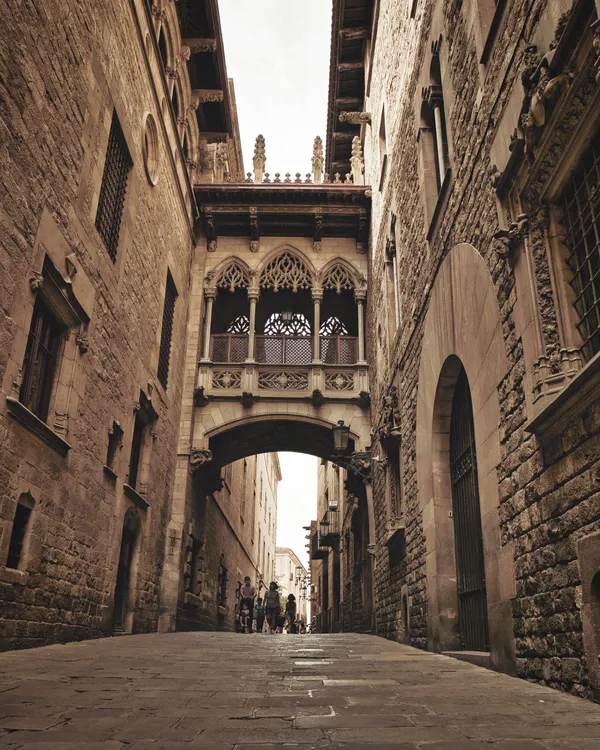
Narrow medieval streets and historic buildings in Barcelona's Gothic Quarter

It’s residential architecture treated as sculpture, and it was built for a real family to actually live in. That’s the part that gets me.

La Pedrera (Casa Milà)

A few blocks up the same street, La Pedrera (officially Casa Milà) was Gaudí’s last private residence before he devoted himself entirely to the Sagrada Família. The wavy stone façade earned it the nickname “the quarry” from unimpressed locals when it was built in 1912. The rooftop, with its surreal chimneys shaped like medieval knights, is the highlight. Visit in the late afternoon when the light catches the white mosaic surfaces and the city spreads out below.

The Gothic Quarter: 2,000 Years in 20 Blocks

The Barri Gòtic (Gothic Quarter) sits on the bones of Roman Barcino. You can still see sections of the original Roman wall, including a 1st-century aqueduct arch, tucked between medieval buildings. The streets here are so narrow that balconies on opposite sides nearly touch.

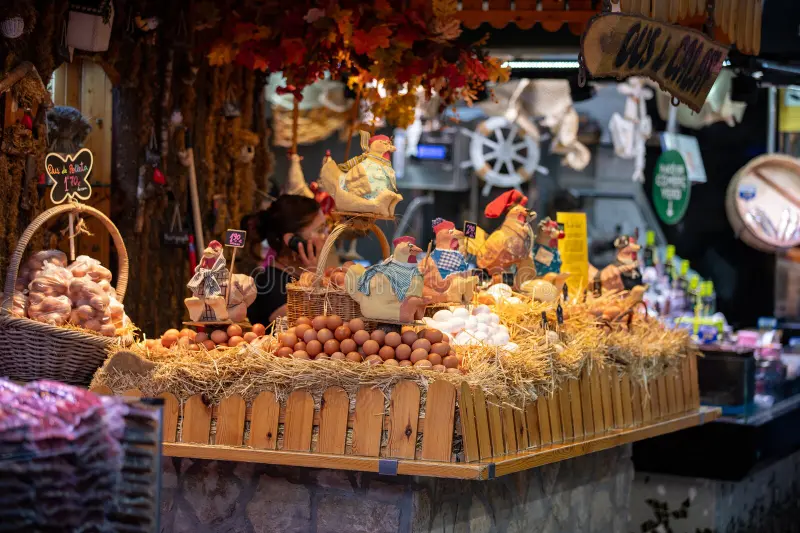
Fresh produce and colorful food stalls at the La Boqueria market in Barcelona

The Cathedral of Barcelona (not to be confused with the Sagrada Família) anchors the quarter. Its 14th-century Gothic façade overlooks a plaza where people gather in the evenings. Inside, 13 white geese wander the cloister garden, one for each year of the martyrdom of Saint Eulalia, Barcelona’s patron saint.

Plaça del Rei is the medieval royal square where Ferdinand and Isabella reportedly received Columbus after his first voyage to the Americas. The Palau Reial Major, the royal palace, frames one side with a massive arched hall built in the 14th century. It’s easy to miss if you’re not looking for it, but the sense of scale when you step inside is striking.

La Boqueria and the Food Scene

Mercat de la Boqueria, just off La Rambla, has been a public market since 1836, though trading on that site goes back to the 13th century. It’s touristy now, no question, but the quality is still real. The jamón ibérico vendors will slice paper-thin pieces for tasting. The seafood stalls have species you won’t recognize. The juice stands are everywhere and genuinely good.

For a sit-down meal, head to the bars at the back of the market or into the side streets of El Raval or El Born. Barcelona’s food culture leans heavily on seafood, especially along the Barceloneta waterfront. Fideuà, a noodle-based dish cooked like paella, is a local specialty worth seeking out. Pair it with a glass of cava, Catalonia’s sparkling wine, which is made just outside the city in the Penedès region.

Staying in Barcelona

On Caravan’s tour, guests stay at the Hotel Labtwentytwo Barcelona. Having a comfortable base matters after a full day of walking Gaudí’s masterworks and getting purposefully lost in the Gothic Quarter. The tour includes guided visits to Casa Batlló, La Pedrera, and the Sagrada Família on Day 13, with free time to explore the food markets and side streets on your own.

A Fitting Finale

After 13 days crossing Portugal and Spain, Barcelona feels like the right ending. It’s forward-looking and creative, a city that builds on its Roman and medieval past without being trapped by it. Gaudí’s buildings alone would justify the stop, but the food, the energy, and the particular quality of Mediterranean light on the waterfront make it something more.

The full Spain and Portugal tour with Caravan runs 14 days from $2,895, covering Lisbon, Seville, Córdoba, Granada, Toledo, Madrid, Valencia, and Barcelona with everything included. Call 1-800-CARAVAN or visit caravan.com to book.

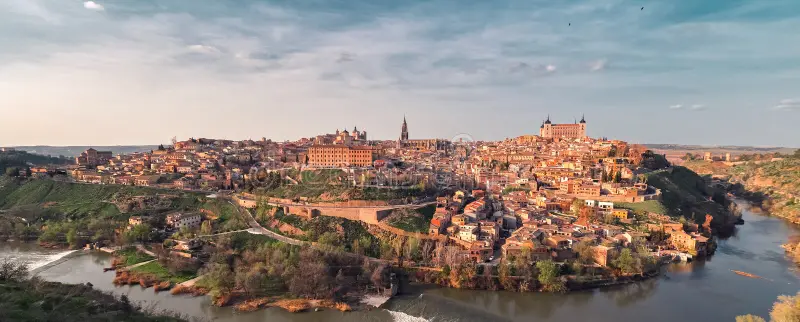
Panoramic view of Toledo, Spain perched on a hill above a bend in the Tagus River

Most people visiting Spain put Madrid, Barcelona, and maybe Seville on their list. Toledo rarely makes the first draft. That’s a mistake, and it’s also what keeps the city so remarkably intact. While bigger Spanish cities have modernized around their historic cores, Toledo looks and feels almost exactly the way it did 500 years ago.

Perched on a granite hill above a bend in the Tagus River, Toledo was the capital of Spain before Madrid took over in 1561. For centuries before that, it was one of the rare places in medieval Europe where Christians, Muslims, and Jews lived and worked alongside each other. That coexistence shaped every building, every street, and every tradition that survives here today.

The “City of Three Cultures”

Toledo’s nickname isn’t just marketing. Walk a few blocks in the old town and you’ll pass a former mosque, a medieval synagogue, and a Gothic cathedral within minutes of each other. The cultural layering is visible everywhere, in the Mudéjar brickwork on church towers, in the Arabic-influenced geometric patterns on doors and walls, in the narrow winding streets that follow a layout older than the Reconquista.

Synagogue of Santa María la Blanca

This 12th-century synagogue was designed by Moorish architects for a Jewish congregation under Christian rule. That sentence alone tells you everything about Toledo’s complicated, fascinating history. Inside, 28 horseshoe arches sit atop octagonal columns in a white, airy space that feels more like a mosque than any synagogue you’ve seen before. It’s small, quiet, and one of the oldest synagogue buildings still standing in Europe.

Mosque of Cristo de la Luz

Built in 999 AD, this tiny mosque is one of the best-preserved examples of Moorish architecture in Spain. The interior uses intersecting arches inspired by the Great Mosque of Córdoba, and the original brickwork is still visible after more than a thousand years. When Toledo fell to Christian forces, they converted it to a church (as they did with most mosques), but the Islamic structure remains dominant.

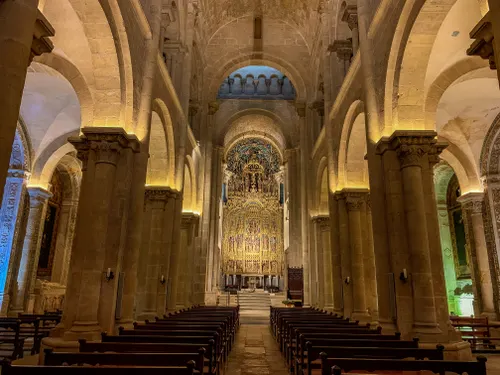
The magnificent Gothic interior of Toledo Cathedral in Spain

Toledo Cathedral: A Gothic Masterpiece

If the smaller religious sites represent Toledo’s diversity, the cathedral represents its Christian ambitions. Construction began in 1226 and took over 250 years to finish. The result is one of the great Gothic cathedrals of Europe, though it’s far less crowded than Notre-Dame or Seville’s cathedral.

The interior is dense with art and ornamentation. The choir stalls, carved from walnut, depict scenes from the conquest of Granada in painstaking detail. The Transparente, an 18th-century baroque altarpiece punched through the ceiling to let in natural light, is either genius or madness depending on your taste. Either way, it’s unforgettable. There’s a skylight carved directly through the Gothic vault above, and when the sun hits it right, the whole rear wall of the altar seems to glow.

El Greco’s painting “The Disrobing of Christ” hangs in the sacristy, along with works by Goya, Titian, and Caravaggio. For a small city, Toledo punches absurdly above its weight in art.

The Knights Templar Connection

Toledo’s history with the Knights Templar adds another layer of intrigue. The Templars were active in Toledo during the Reconquista, and their influence is woven into the city’s military and religious history. The nearby Castle of San Servando, visible from the old town, was a Templar stronghold. On Caravan’s Spain and Portugal tour, the tour director shares stories about the Templars’ role in the region, connecting the architecture and military history you’re seeing to the broader story of medieval Spain.

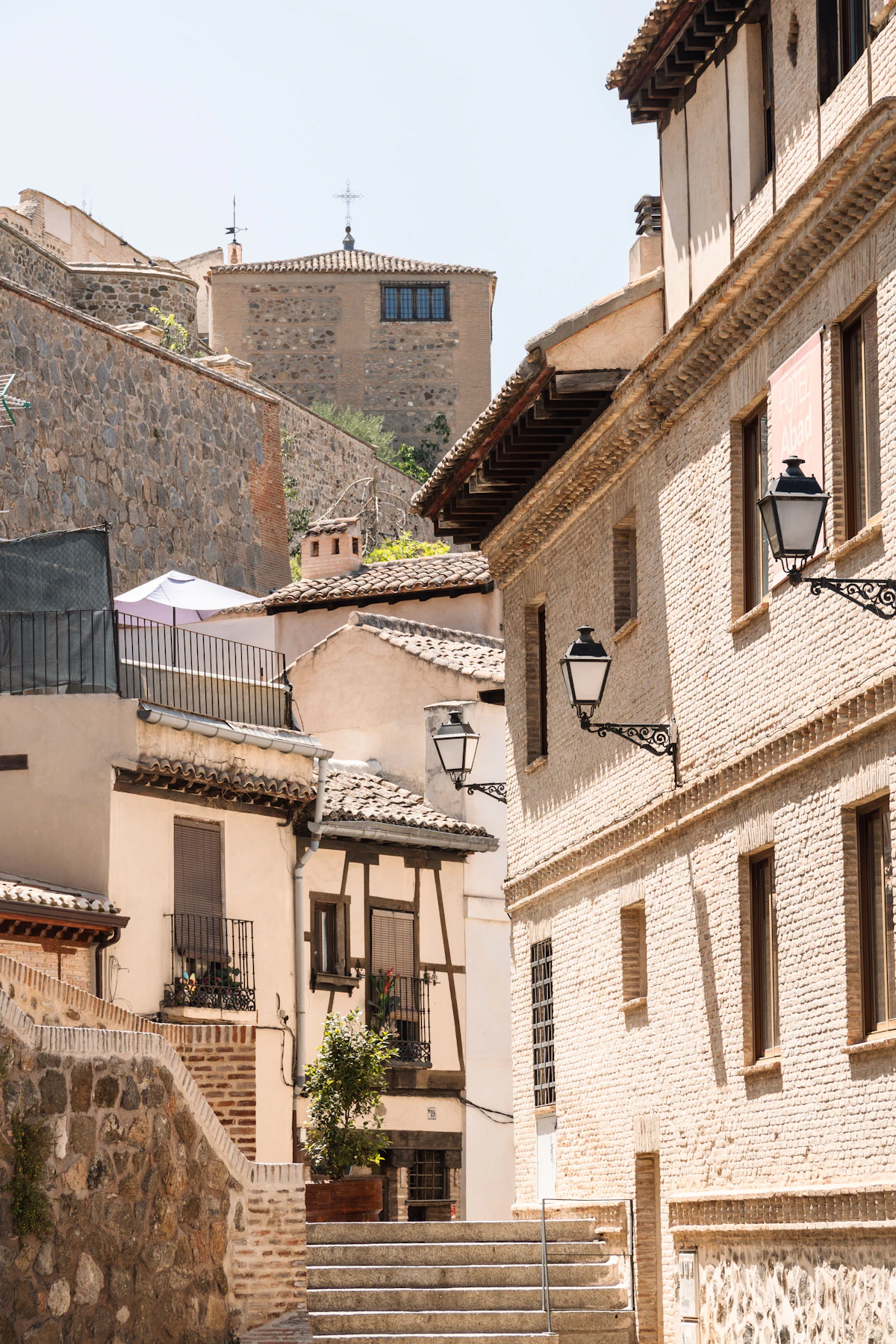
A narrow medieval street in Toledo, Spain with historic stone buildings

There’s something satisfying about hearing those stories while standing in the actual locations. It’s the difference between reading about history and walking through it.

El Greco’s City

Domenikos Theotokopoulos, the Greek-born painter known as El Greco, arrived in Toledo in 1577 and never left. His elongated figures, stormy skies, and intense emotional style were shaped by this city, and you can see why. Toledo has a dramatic quality, perched on that rocky promontory with the river wrapping around it, that practically begs for El Greco’s treatment.

The Museo del Greco (recently renovated) gives a good overview of his work and life in Toledo. But his paintings are scattered throughout the city, in churches, convents, and the cathedral. His masterpiece, “The Burial of the Count of Orgaz,” hangs in the Church of Santo Tomé and is worth the small admission fee. The lower half depicts a 14th-century funeral with portraits of Toledo’s real citizens. The upper half opens into a swirling, mystical vision of heaven. The contrast between the two halves is startling.

The Steel City

Toledo has been famous for its steel since Roman times. The city’s swordsmiths supplied blades to Roman legions, and later to the Spanish military. Toledano steel was considered the finest in Europe through the Renaissance. Today, you’ll see shops on every street selling swords, daggers, and armor. Most of it is decorative and tourist-oriented, but a few workshops still use traditional techniques. Look for the ones with actual forges in the back rather than mass-produced inventory up front.

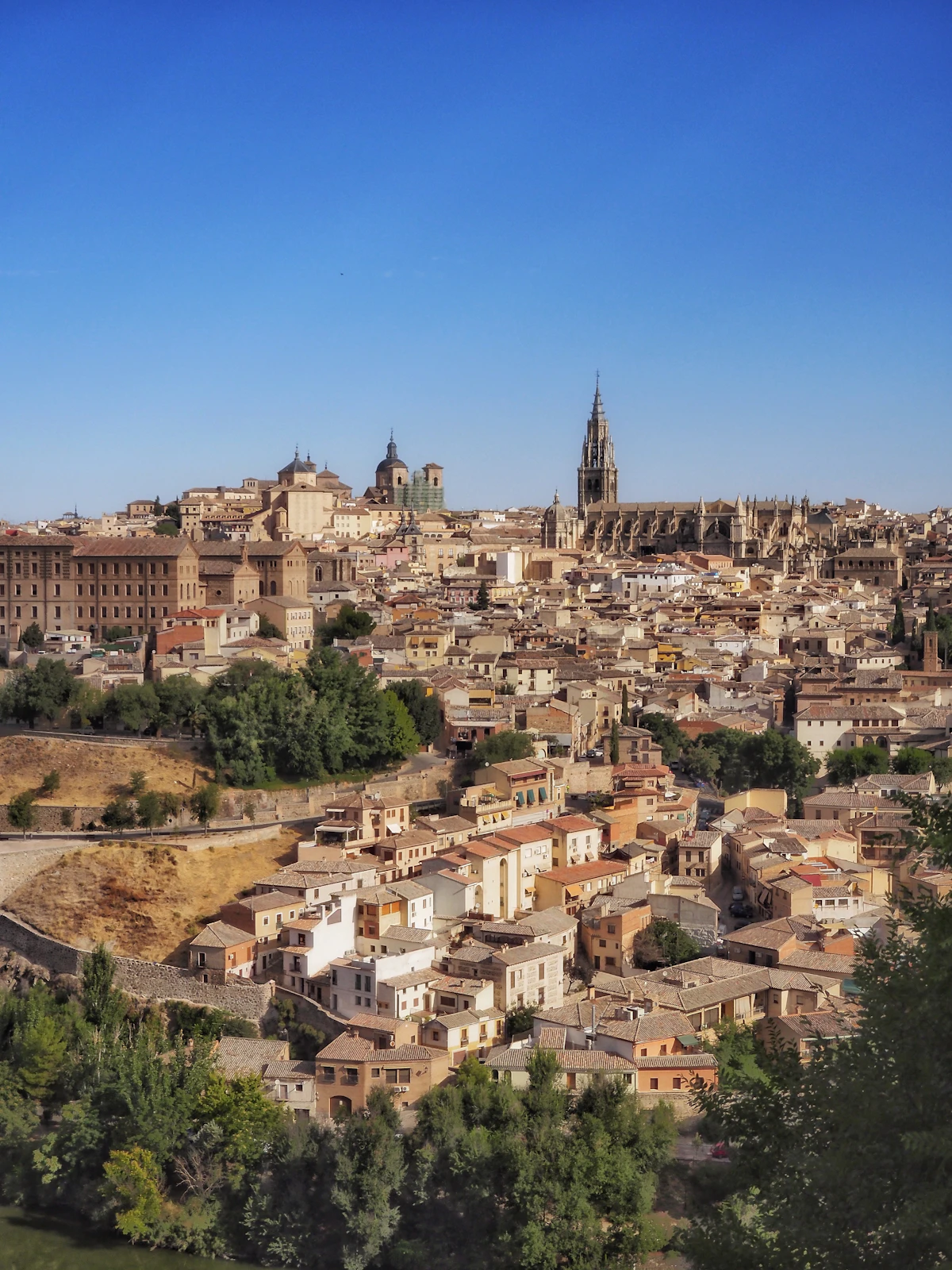
The historic skyline of Toledo with its cathedral and ancient fortifications

Getting There and Getting Around

Toledo sits about 45 minutes south of Madrid, making it a natural day trip. The old town is entirely walkable, though “walkable” in Toledo means steep hills and cobblestone streets. Bring sturdy shoes.

On Caravan’s Spain and Portugal itinerary, Toledo is visited on the drive from Granada to Madrid (Day 8), with guided time at the cathedral and in the old town. It’s one of those stops that travelers consistently say surprised them the most. They came expecting a quick detour and left wishing they had more time.

Why You Shouldn’t Skip It

Toledo is the kind of place that rewards attention. It doesn’t have the flashy nightlife of Madrid or the beachfront energy of Barcelona. What it has is depth. Layer after layer of history visible in every stone wall and carved doorway, a skyline that hasn’t changed in centuries, and the feeling that you’ve stepped into something real and unpolished.

Explore the full 14-day Spain and Portugal tour with Caravan, which includes Toledo along with Lisbon, Seville, the Alhambra, Madrid, Valencia, and Barcelona. Everything is included from $2,895. Call 1-800-CARAVAN for details.

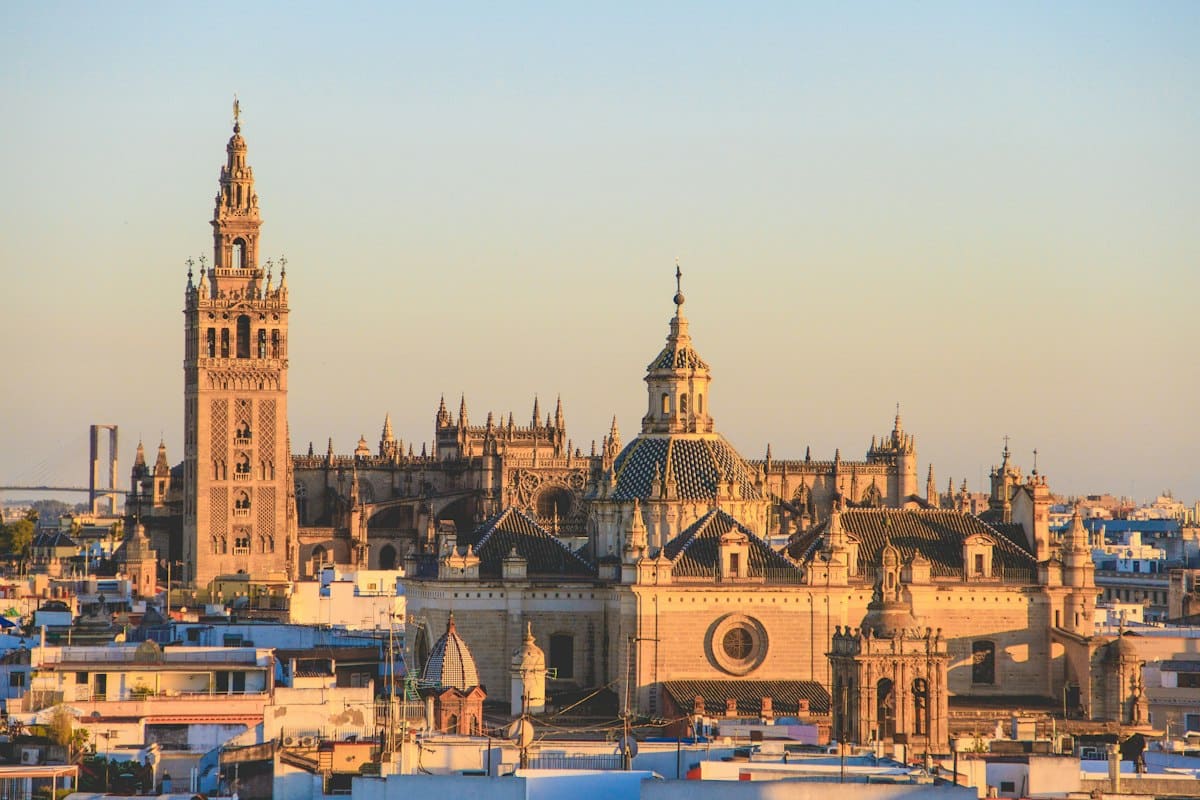
The Seville Cathedral and La Giralda bell tower rising above the city skyline

Seville does not ease you in gently. Within a single day, you can stand inside the largest Gothic cathedral on earth, walk through a royal palace that’s been continuously occupied for over a thousand years, and watch a flamenco performance so raw it makes your chest tight. That’s a lot to take in. It’s also exactly the right amount.

This city in southern Spain’s Andalusia region has a rhythm to it. Mornings are for monuments. Afternoons slow down in the heat. And evenings, when the temperature finally drops and the streets fill up again, are for the things Seville does best: food, music, and staying out later than you planned.

Seville Cathedral: Bigger Than You Expect

The Cathedral of Saint Mary of the See (Catedral de Santa María de la Sede) holds a Guinness World Record as the largest Gothic cathedral by volume. It was built on the site of a 12th-century Almohad mosque, and the builders reportedly declared, “Let us build a church so beautiful and so grand that those who see it finished will think we are mad.” They were not exaggerating.

What to See Inside

The interior is cavernous. Eighty chapels line the perimeter. The main altarpiece (retablo mayor) is the largest in Christendom, standing over 65 feet tall and covered in gold leaf depicting 44 scenes from the life of Christ. It took 82 years to complete.

Christopher Columbus is buried here, or at least partially. His tomb, held aloft by four bronze figures representing the kingdoms of Castile, León, Aragón, and Navarra, is one of the most visited spots inside the cathedral. DNA analysis in 2006 confirmed the remains are at least partly his, though the Dominican Republic also claims to have his bones. Columbus, it seems, is as well-traveled in death as he was in life.

La Giralda

The bell tower, La Giralda, was originally the minaret of the mosque. Instead of stairs, it has 35 gently sloping ramps, designed so the muezzin could ride a horse to the top for the call to prayer. Today, you walk up those same ramps to a viewing platform 340 feet above the city. The panorama takes in the Alcázar, the bullring, the Guadalquivir River, and Seville’s patchwork of white and ochre buildings stretching to the horizon.

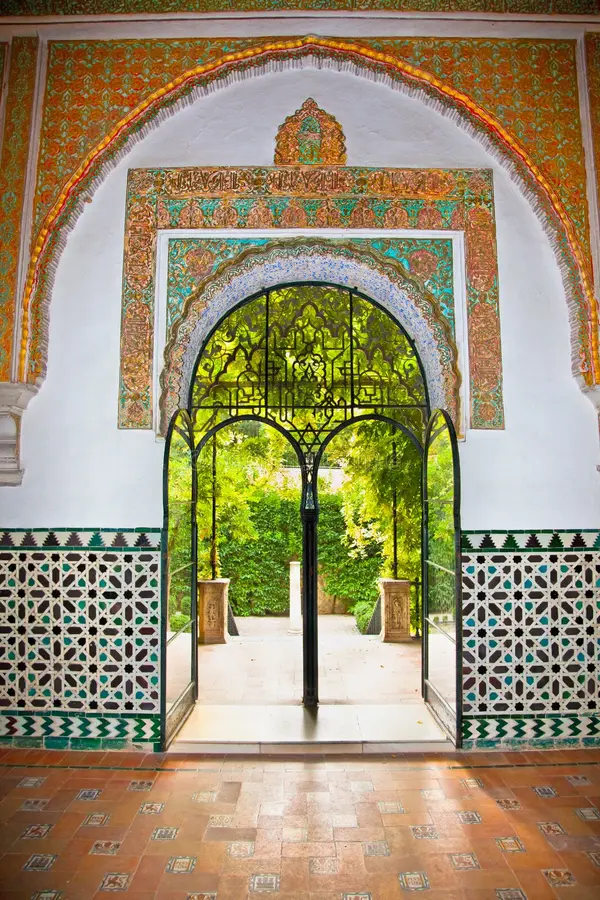
The ornate courtyards and Mudejar arches of the Royal Alcazar of Seville

The Royal Alcázar: Still a Working Palace

The Alcázar of Seville is not a museum. The Spanish royal family still uses the upper floors when they visit the city, making it the oldest royal palace in Europe that’s still in active use. That fact alone sets it apart from most historical sites, where everything is roped off and fossilized. Parts of the Alcázar feel alive.

Mudéjar Architecture at Its Peak

The palace complex has been expanded and modified by every ruler since the original Moorish fort went up in the 10th century. But the star is the Palace of King Pedro, built in the 1360s by Peter I of Castile using Muslim craftsmen from Granada and Toledo. The result is Mudéjar architecture at its finest: horseshoe arches, geometric tile work (azulejos), carved stucco walls, and cedar ceilings with inlaid patterns.

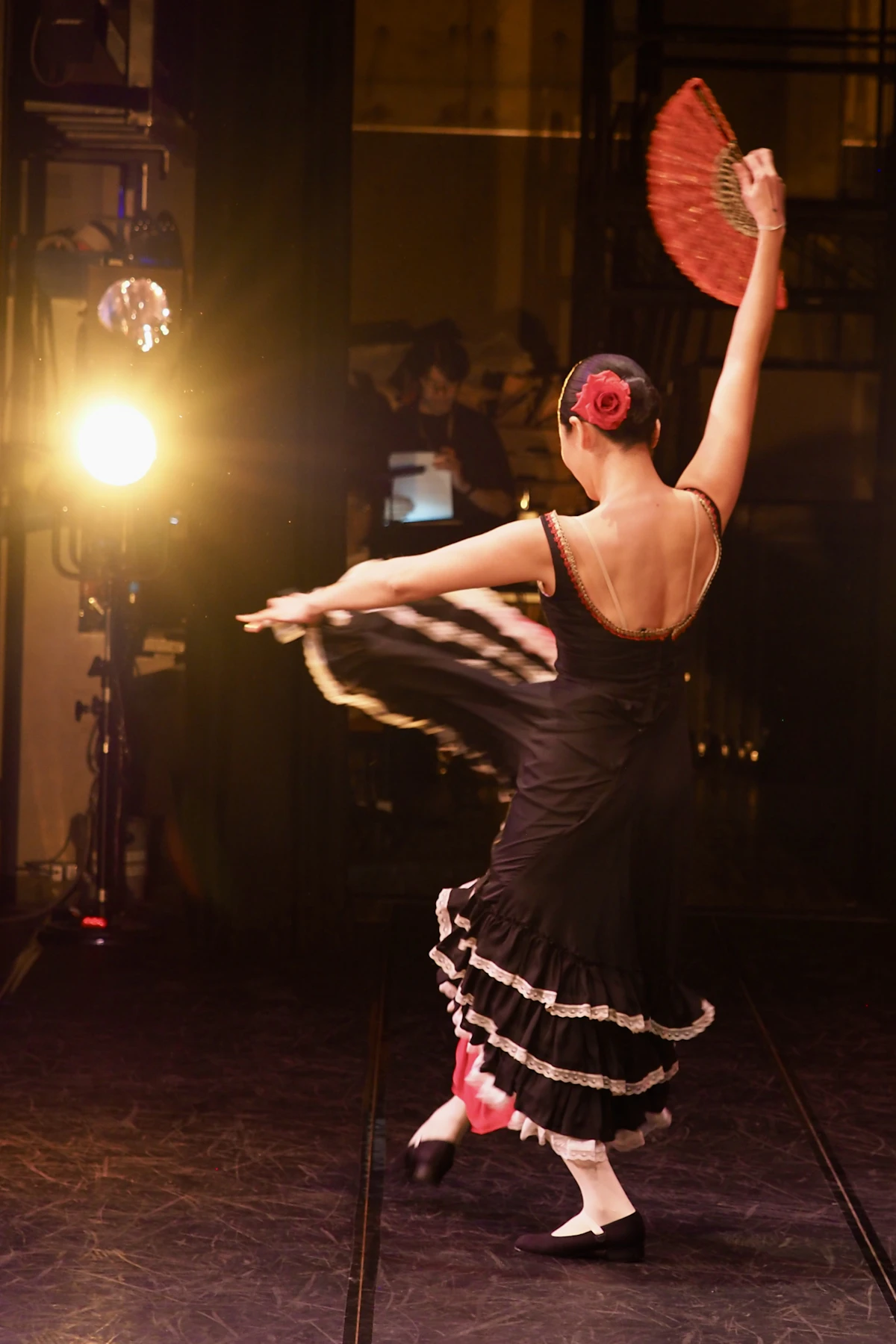
A passionate flamenco dancer performing in Seville, the birthplace of flamenco

The Courtyard of the Maidens (Patio de las Doncellas) is the architectural centerpiece. A sunken garden surrounded by pointed arches and double columns, it was restored in 2005 to reveal the original 14th-century layout that had been buried under Renaissance-era modifications. If you recognize it from television, that’s because it doubled as the Water Gardens of Dorne in Game of Thrones.

The Gardens

The Alcázar gardens are expansive and layered, with sections ranging from formal Renaissance layouts to wilder, more overgrown corners shaded by palm and orange trees. The Mercury Pond, a large reflecting pool at the center, dates to the era of Charles V. Peacocks wander the paths. The scent of jasmine and orange blossom hangs in the air, particularly in spring.

Give yourself at least 90 minutes here. Two hours is better.

Flamenco: Not a Show, a Conversation

Seville is the birthplace of flamenco, and seeing it here is different from seeing it anywhere else. The best venues are intimate, sometimes holding fewer than 50 people in a room not much bigger than a living room. The performers are close enough that you can see the sweat on the guitarist’s hands and hear the dancer’s breath between footwork sequences.

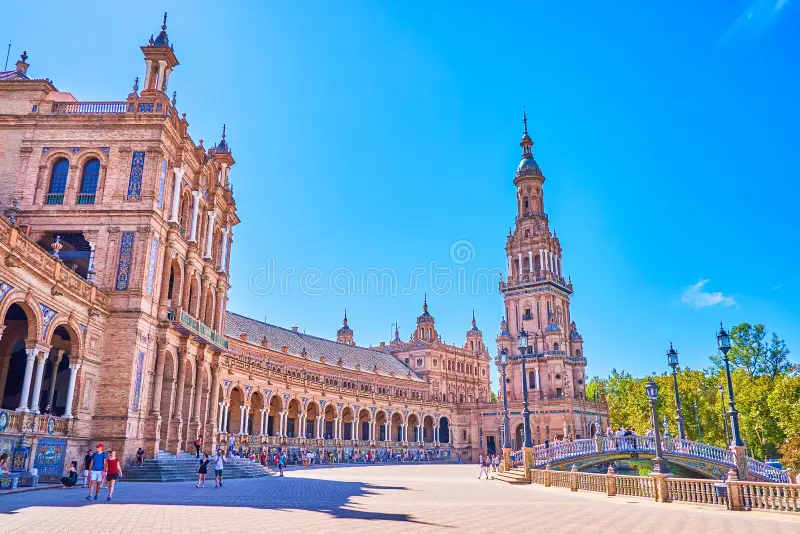
The grand Plaza de Espana in Seville with its sweeping semicircular architecture

Flamenco is built on a dialogue between the singer (cantaor), the guitarist (tocaor), and the dancer (bailaor). The palmas, rhythmic hand clapping from other performers, and the occasional shout of “olé” aren’t decoration. They’re communication, encouragement, markers of duende, the elusive emotional intensity that separates a good performance from one that gives you goosebumps.

On Caravan’s Spain and Portugal tour, an evening flamenco show is built into the Seville itinerary. You don’t have to research venues or worry about tourist-trap performances. The tour director arranges a quality experience, and it comes after a full day exploring the Cathedral and the Alcázar, which is honestly the ideal sequence. By evening, you’ve absorbed enough of Seville’s history to understand why flamenco sounds the way it does here.

Eating in Seville

A quick note on food, because you’ll need it. Seville runs on tapas. Wander into any bar in the Santa Cruz or Triana neighborhoods and order whatever’s on the board. Espinacas con garbanzos (spinach with chickpeas) is a Seville staple. So is salmorejo, a thick, cold tomato soup that’s richer than gazpacho and topped with jamón and hard-boiled egg. Pair everything with a cold glass of manzanilla sherry.

Making the Most of Your Seville Day

Caravan’s 14-day Spain and Portugal itinerary spends a full day in Seville, with guided visits to both the Cathedral and the Alcázar followed by the flamenco evening. Guests stay at the Hotel Macia Sevilla Kubb. The tour covers Seville as part of a route that starts in Lisbon and ends in Barcelona, all included from $2,895 with hotels, most meals, and a professional tour director.

To book or learn more, call 1-800-CARAVAN or visit caravan.com.

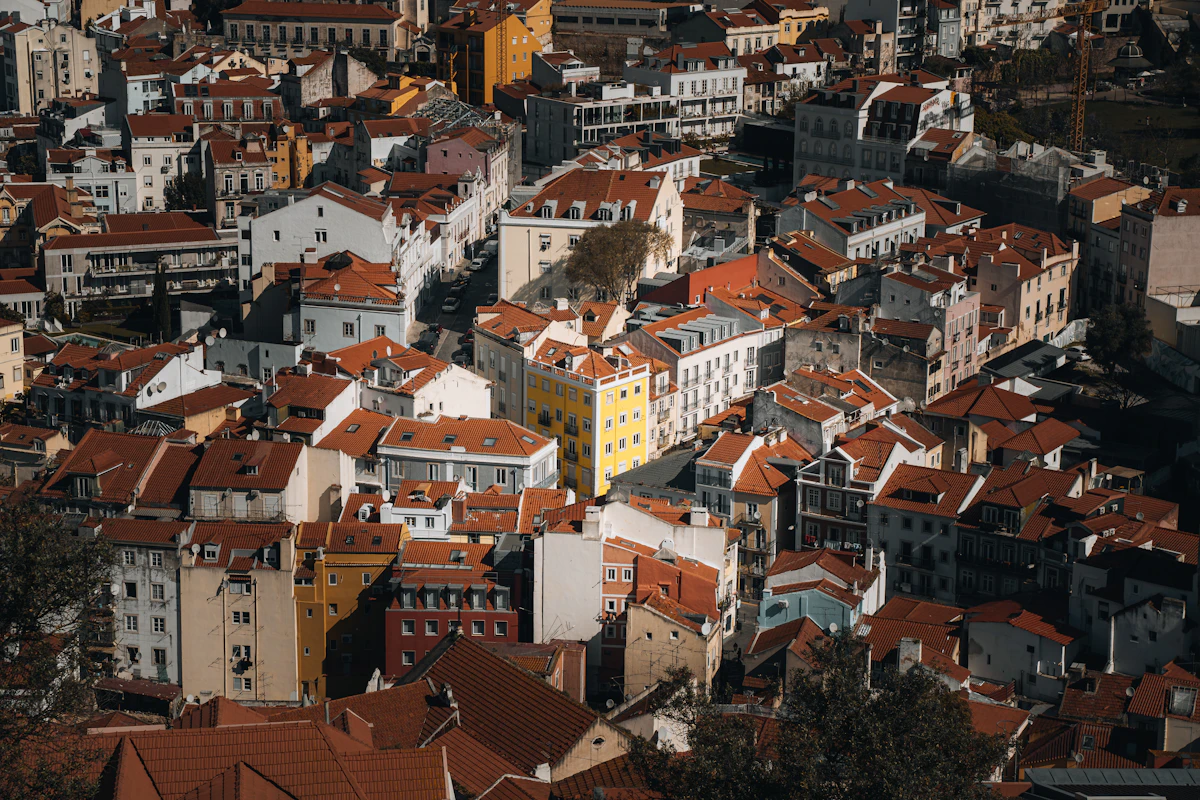
Colorful buildings and terracotta rooftops of Lisbon, Portugal with the Tagus River in the distance

Lisbon is a city that earns your attention one hill at a time. It’s built on seven of them, which means you’ll feel it in your calves by noon, but you’ll also stumble into viewpoints that stop you mid-sentence. The light here has a particular quality, warm and a little hazy off the Tagus River, that makes even ordinary streets look cinematic.

As the starting point of Caravan’s 14-day Spain and Portugal tour, Lisbon sets a high bar for the rest of the trip. It’s the kind of city where a morning walk through one neighborhood can cover 500 years of history, three pastry shops, and a tram ride that doubles as a thrill ride.

Belém: Where Portugal’s Golden Age Still Lives

Start in Belém, a waterfront district about 15 minutes west of the city center. This is where the big monuments are, and they exist because of one thing: money. Specifically, the spice trade money that flooded Portugal in the 15th and 16th centuries when explorers like Vasco da Gama were opening sea routes to India and beyond.

Jerónimos Monastery

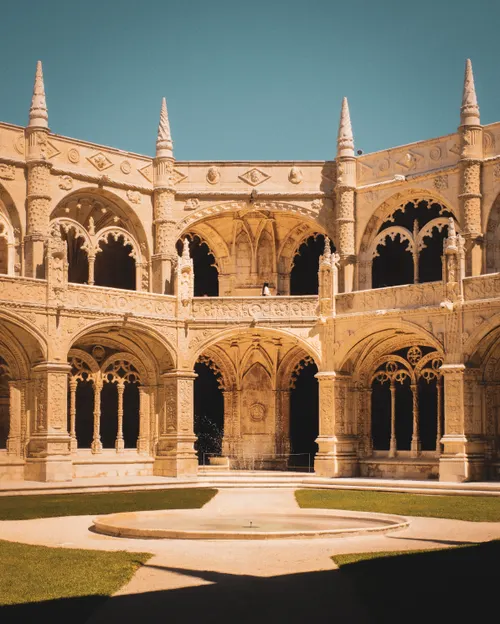
The Jerónimos Monastery is the crown jewel of Belém and a UNESCO World Heritage Site. Construction started in 1501, funded by a tax on spices, and it took nearly a century to complete. The Manueline style, Portugal’s own twist on late Gothic architecture, is on full display here. Think carved stone ropes, anchors, sea creatures, and coral motifs wrapping around doorways and columns. The south portal alone could hold your attention for 20 minutes if you start picking out the individual carvings.

Inside, the church is surprisingly restrained compared to the exterior. The vaulted ceiling fans out from slender columns like palm trees, and the acoustics are remarkable. Vasco da Gama is entombed here, along with the poet Luís de Camões, which tells you something about what Portugal values: the people who sailed to the edge of the map and the one who wrote about it.

Pastéis de Belém

You cannot visit Belém without stopping at Pastéis de Belém, the bakery that’s been making custard tarts since 1837 using a recipe from the monks at the Jerónimos Monastery. The line outside looks intimidating, but it moves fast. Order at least two. The pastry is flaky and shatteringly crisp, and the custard has a slight caramel char on top. Dust them with cinnamon and powdered sugar at the counter. Eat them standing up while they’re still warm.

The ornate Manueline architecture of the Jeronimos Monastery in Belem, Lisbon

Yes, you can get pastéis de nata all over Lisbon. They’re fine. These are better.

Alfama: The Soul of Old Lisbon

Alfama is the oldest neighborhood in Lisbon, one of the few areas that survived the devastating 1755 earthquake. The streets are narrow, steep, and deliberately confusing. Getting lost here isn’t a risk; it’s the whole point.

Tram 28

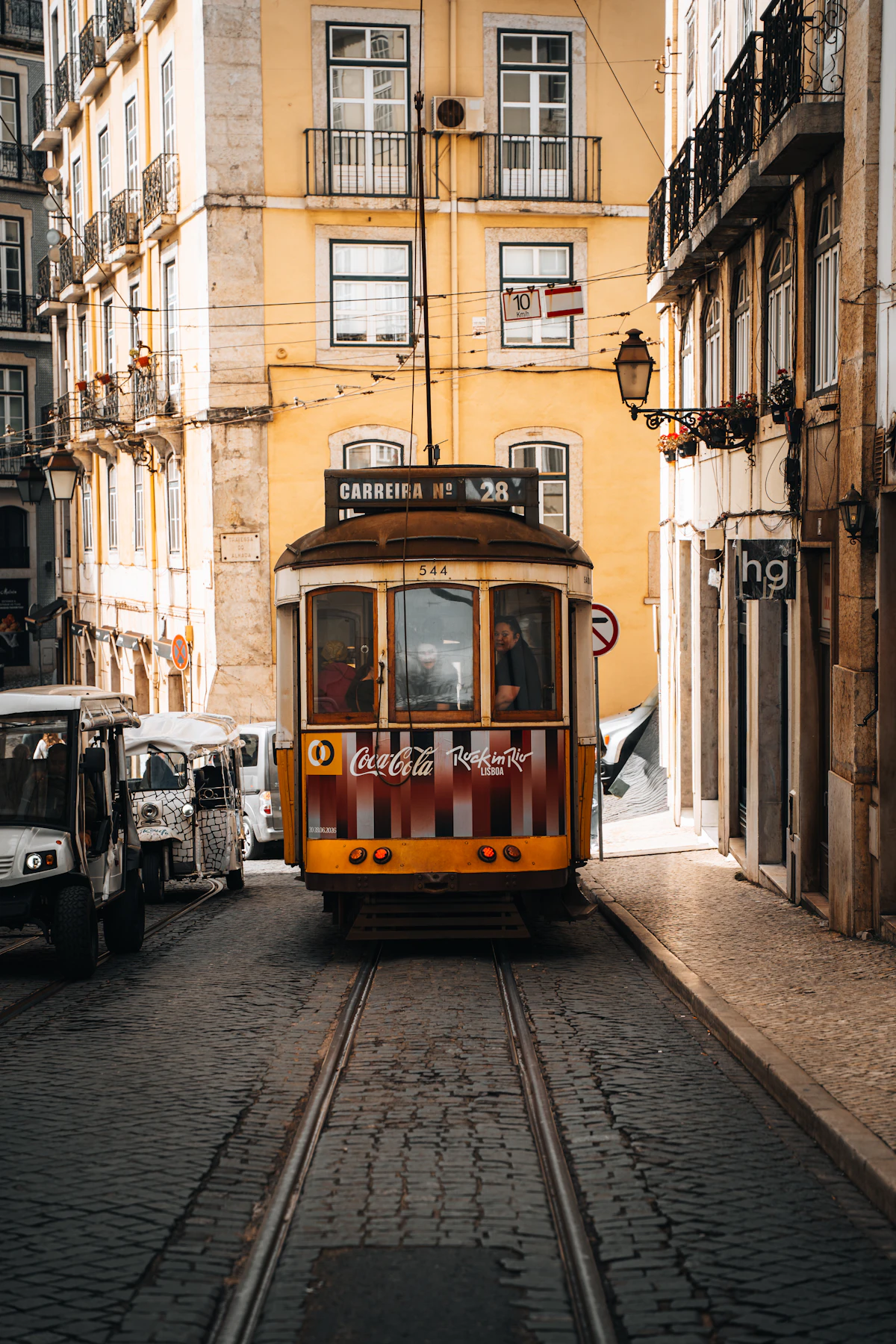
The famous Tram 28 rattles through Alfama on tracks laid in the late 1800s. The wooden tram cars are the originals, not replicas, and they squeeze through streets so tight you could reach out and touch the laundry hanging from balconies. It’s a genuine piece of living infrastructure, though tourists have largely overtaken locals on this route. If the line is too long, walking the route is just as rewarding and considerably less crowded.

A yellow Tram 28 navigating the narrow streets of Lisbon's historic neighborhoods

São Jorge Castle

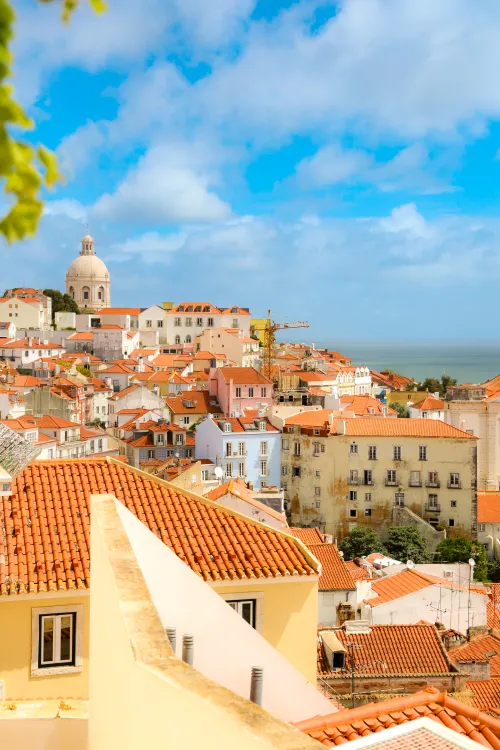
At the top of Alfama sits the Castelo de São Jorge, a Moorish fortification dating to the 11th century. The castle itself is modest compared to what you’ll see later in Spain, but the views from the ramparts are the best in Lisbon. The entire city spreads out below, terra-cotta rooftops cascading down to the river, with the April 25th Bridge (Lisbon’s answer to the Golden Gate) in the distance.

Baixa and Chiado: The Rebuilt Heart of Lisbon

The Baixa district was completely rebuilt after the 1755 earthquake under the direction of the Marquis of Pombal. The grid layout was revolutionary for its time, designed with earthquake-resistant wooden cage structures hidden inside the walls. It’s one of the earliest examples of urban seismic engineering.

View over the rooftops of the Alfama district in Lisbon toward the Tagus River

Walk through the Rua Augusta arch into the Praça do Comércio, the grand waterfront square that once served as the gateway to Lisbon’s trading empire. From there, work your way uphill into Chiado, the literary and bohemian quarter. The poet Fernando Pessoa used to drink at the café A Brasileira, and his bronze statue still sits at a table outside, posing for selfies with every passerby.

Queluz Palace: The Portuguese Versailles

Just outside Lisbon, the Queluz National Palace is an 18th-century royal residence that often gets overlooked by visitors focused on Sintra. That’s a mistake. The rococo interiors are lavish without being exhausting, and the formal gardens include a canal lined with hand-painted azulejo tiles depicting harbors and ships. It’s a quieter, more intimate experience than the major Lisbon sites, and Caravan’s tour includes it as part of the Lisbon-area itinerary.

Practical Walking Tips for Lisbon

Bring shoes with good grip. Lisbon’s sidewalks are paved with calçada portuguesa, those black and white limestone tiles arranged in wave patterns. They’re beautiful and genuinely slippery when wet.

Stay hydrated. Lisbon’s hills are no joke, and the sun reflects off all that white stone and tile.

Budget more time than you think. Lisbon is a city that rewards slow movement. Ducking into a tiled entryway, pausing at a miradouro (viewpoint), or sitting in a small tasca (tavern) with a glass of vinho verde and a plate of grilled sardines can be the best part of your day.

Start Your Iberian Trip Here

Lisbon is day two of Caravan’s fully guided Spain and Portugal tour, a 14-day itinerary that continues through the Algarve, Seville, Granada, Madrid, Valencia, and Barcelona. Everything is included from $2,895: hotels, most meals, all activities, and a professional tour director who handles the logistics so you can focus on the tarts and the tram rides.

Call 1-800-CARAVAN or visit caravan.com to see the full itinerary.

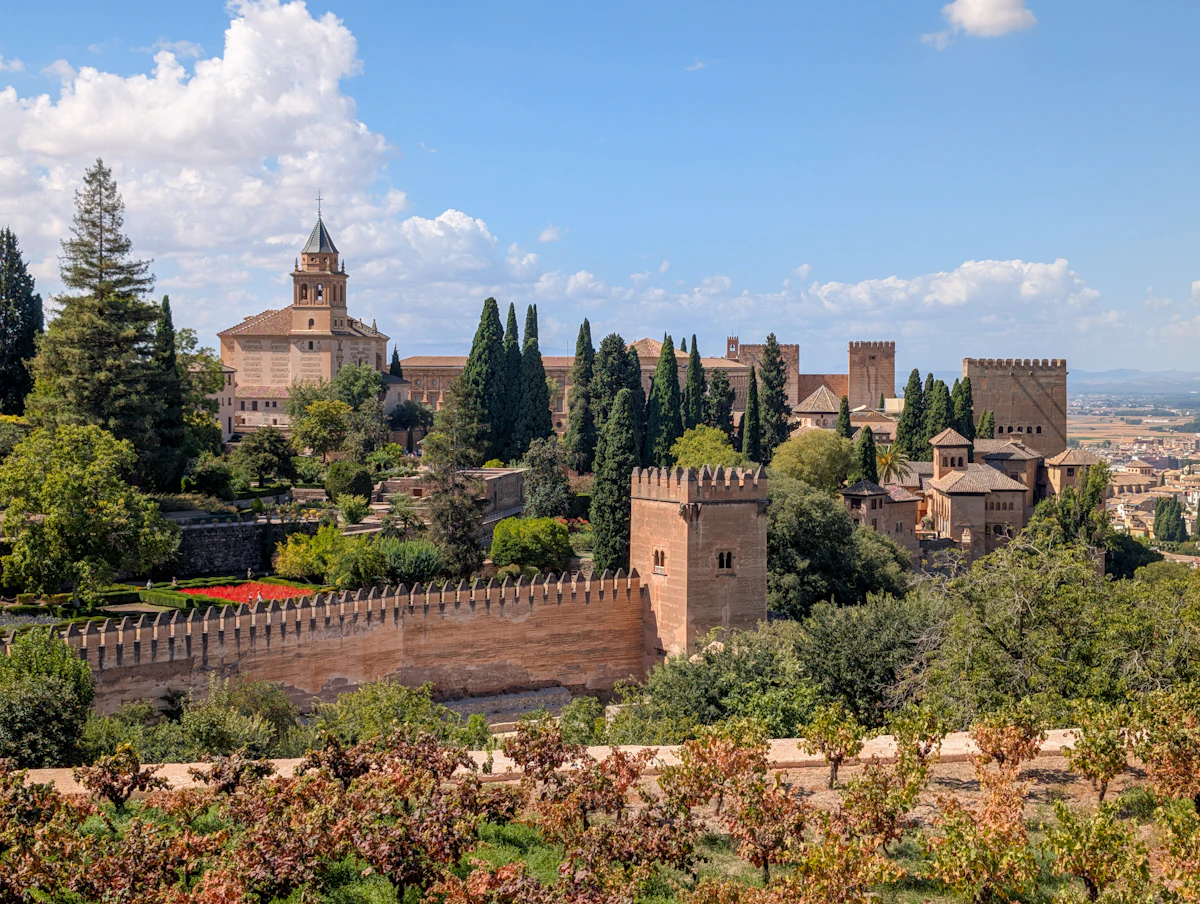
The Alhambra palace complex overlooking Granada, Spain with the Sierra Nevada mountains in the background

Few places in Europe hit you the way the Alhambra does. You walk through a modest entrance, round a corner, and suddenly you’re standing inside a palace that looks like it was carved from lace. The detail is almost impossible to process. Every surface, every archway, every ceiling is covered in geometric patterns and Arabic calligraphy so intricate that your eyes don’t know where to land first.

The Alhambra sits on a hill above Granada in southern Spain, and it’s been drawing visitors for centuries. Washington Irving wrote about it in 1832. Since then, it’s become the most visited monument in Spain, with nearly three million people walking through its gates every year. That popularity is well earned, but it also means you need to plan ahead.

A Quick History (Because It Actually Matters Here)

The Alhambra started as a small fortress in the 9th century, but the palace complex you see today was built mostly during the 13th and 14th centuries under the Nasrid dynasty. The Nasrids were the last Muslim rulers on the Iberian Peninsula, and they knew it. There’s a theory that the sheer beauty of the Alhambra was a kind of defiance, a statement that their civilization was extraordinary even as it was being pushed to its final corner of Spain.

In 1492, the Catholic Monarchs Ferdinand and Isabella took Granada, and the Alhambra became a Christian court. Charles V later demolished part of the complex to build a Renaissance palace smack in the middle of it. That palace is actually impressive on its own, but standing next to the Nasrid masterwork, it feels a bit like parking a pickup truck in a botanical garden.

The Nasrid Palaces: This Is Why You Came

The Nasrid Palaces are the heart of the Alhambra, and they’re the reason the site sells out weeks in advance. Your entry time is printed on your ticket, and they mean it. Miss your window by even a few minutes and you’re out of luck.

Inside, three main palaces flow into each other. The Mexuar was the administrative and judicial wing. The Comares Palace, centered around the Court of the Myrtles, was the official throne room area. And the Palace of the Lions, with its famous fountain surrounded by twelve marble lions, was the private royal quarters.

The Court of the Lions

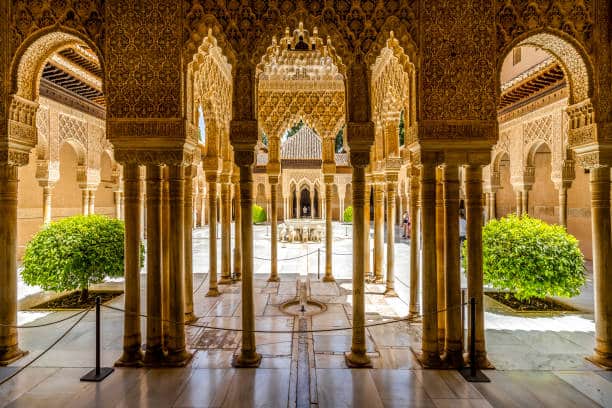
This courtyard gets most of the photographs, and for good reason. The proportions are perfect. Slender marble columns support arches covered in muqarnas, those honeycomb-like carvings that seem to drip from the ceiling. The central fountain dates to the 14th century and was recently restored. Water channels extend from it in four directions, a reference to the four rivers of paradise described in Islamic tradition.

The Court of the Lions in the Alhambra featuring the marble fountain surrounded by slender columns and arches

The Hall of the Abencerrajes

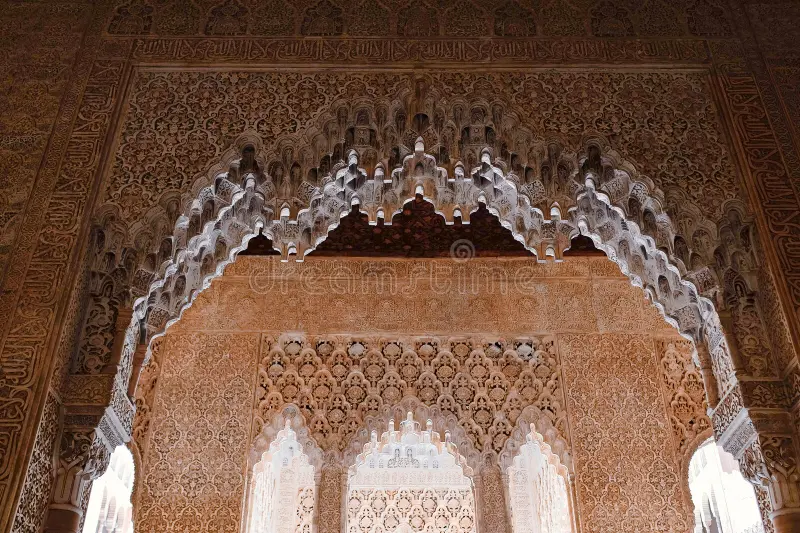
Look up when you enter this room. The star-shaped muqarnas ceiling is one of the most photographed features in all of Spain. The geometry is based on the Pythagorean theorem, and the way light filters through the small windows at the base of the dome changes the color and mood throughout the day. Morning light tends to be softer. By afternoon, the shadows deepen and the whole thing takes on an amber glow.

Elaborate carved plaster walls and muqarnas ceilings inside the Nasrid Palaces of the Alhambra

There’s also a grim legend attached to this room. The Abencerrajes were a noble family reportedly massacred here during a power struggle. The rusty stains on the marble fountain basin? Locals will tell you it’s blood. Geologists say it’s iron oxide. Believe whichever version you prefer.

The Generalife Gardens

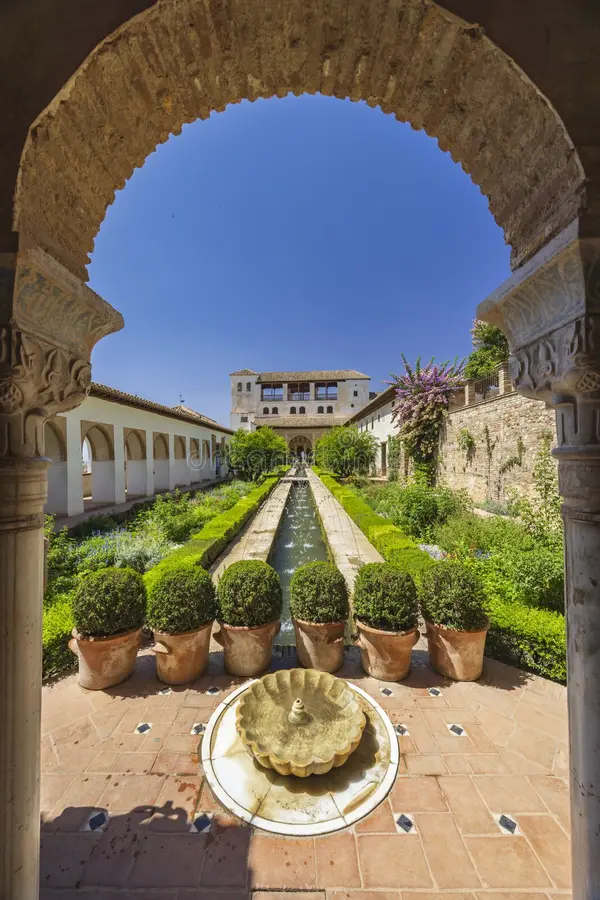
After the intensity of the Nasrid Palaces, the Generalife feels like exhaling. These gardens were the summer residence of the Nasrid sultans, built on the hillside just above the main complex. The layout is all about water. Narrow channels, fountains, and cascading pools were designed to cool the air and create ambient sound, basically medieval air conditioning and a white noise machine in one.

The Generalife gardens with fountains and water channels at the Alhambra in Granada

The Patio de la Acequia is the centerpiece, a long rectangular pool flanked by arched water jets and bordered by roses, hedges, and cypress trees. It’s a good place to sit for a few minutes and let the palace experience settle in.

Practical Tips That Will Save You Headaches

Book your tickets early. The Alhambra limits daily visitors, and Nasrid Palace entry times sell out fast, sometimes four to six weeks in advance during peak season (April through October). You can buy tickets through the official Patronato de la Alhambra website.

Wear comfortable shoes. The complex covers about 26 acres, and you’ll be on your feet for two to three hours minimum. Some paths are cobblestone or packed dirt, and there are hills.

Go in the morning if you can. The light is better for photos, the crowds are slightly thinner, and you won’t be fighting the afternoon heat, which in Granada can top 100°F in summer.

Don’t skip the Alcazaba. The oldest part of the complex is this military fortress at the western tip. Climb the Torre de la Vela for a panoramic view of Granada, the Sierra Nevada mountains, and the surrounding plains. On a clear day, you can see all the way to the distant hills of the Alpujarras.

Where to Stay in Granada

Your hotel matters more than you might think in Granada, because waking up to an Alhambra view is an experience all on its own. On Caravan’s Spain and Portugal tour, guests stay at the Hotel Barceló Carmen Granada, which has a rooftop terrace with a direct sightline to the Alhambra. Watching the palace light up at night from that terrace, drink in hand, is one of those quiet moments that sticks with you.

Caravan’s tour also includes a fully guided visit to the Alhambra with tickets and a professional tour director already arranged. If you’ve ever dealt with the stress of scoring Nasrid Palace tickets on your own, you know how valuable that is. The 14-day Spain and Portugal itinerary covers Lisbon, Seville, Córdoba, Toledo, Madrid, Valencia, and Barcelona too, all included from $2,895.

The Bottom Line

The Alhambra deserves its reputation. It’s not one of those overhyped tourist sites that disappoints in person. If anything, it’s the opposite. Photos can’t capture the scale, the silence inside the Nasrid Palaces, or the way the carved plaster walls seem to shift depending on the light. Go with a plan, give yourself time, and don’t rush it.

Ready to see it for yourself? Explore Caravan’s Spain and Portugal tour or call 1-800-CARAVAN to learn more about visiting the Alhambra as part of a fully guided 14-day itinerary.