Why Toledo is Spain’s Best Kept Secret (and Worth Every Minute)
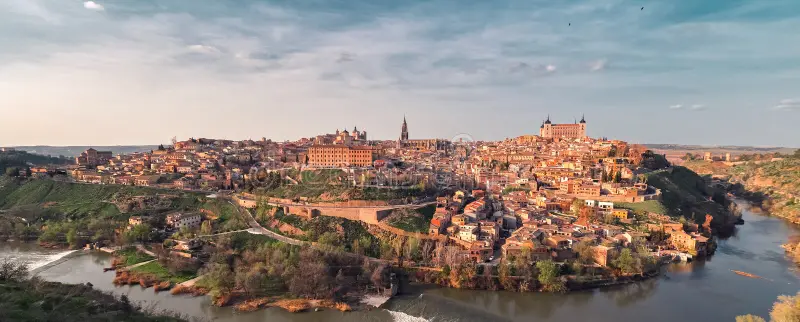
Most people visiting Spain put Madrid, Barcelona, and maybe Seville on their list. Toledo rarely makes the first draft. That’s a mistake, and it’s also what keeps the city so remarkably intact. While bigger Spanish cities have modernized around their historic cores, Toledo looks and feels almost exactly the way it did 500 years ago.
Perched on a granite hill above a bend in the Tagus River, Toledo was the capital of Spain before Madrid took over in 1561. For centuries before that, it was one of the rare places in medieval Europe where Christians, Muslims, and Jews lived and worked alongside each other. That coexistence shaped every building, every street, and every tradition that survives here today.
The “City of Three Cultures”
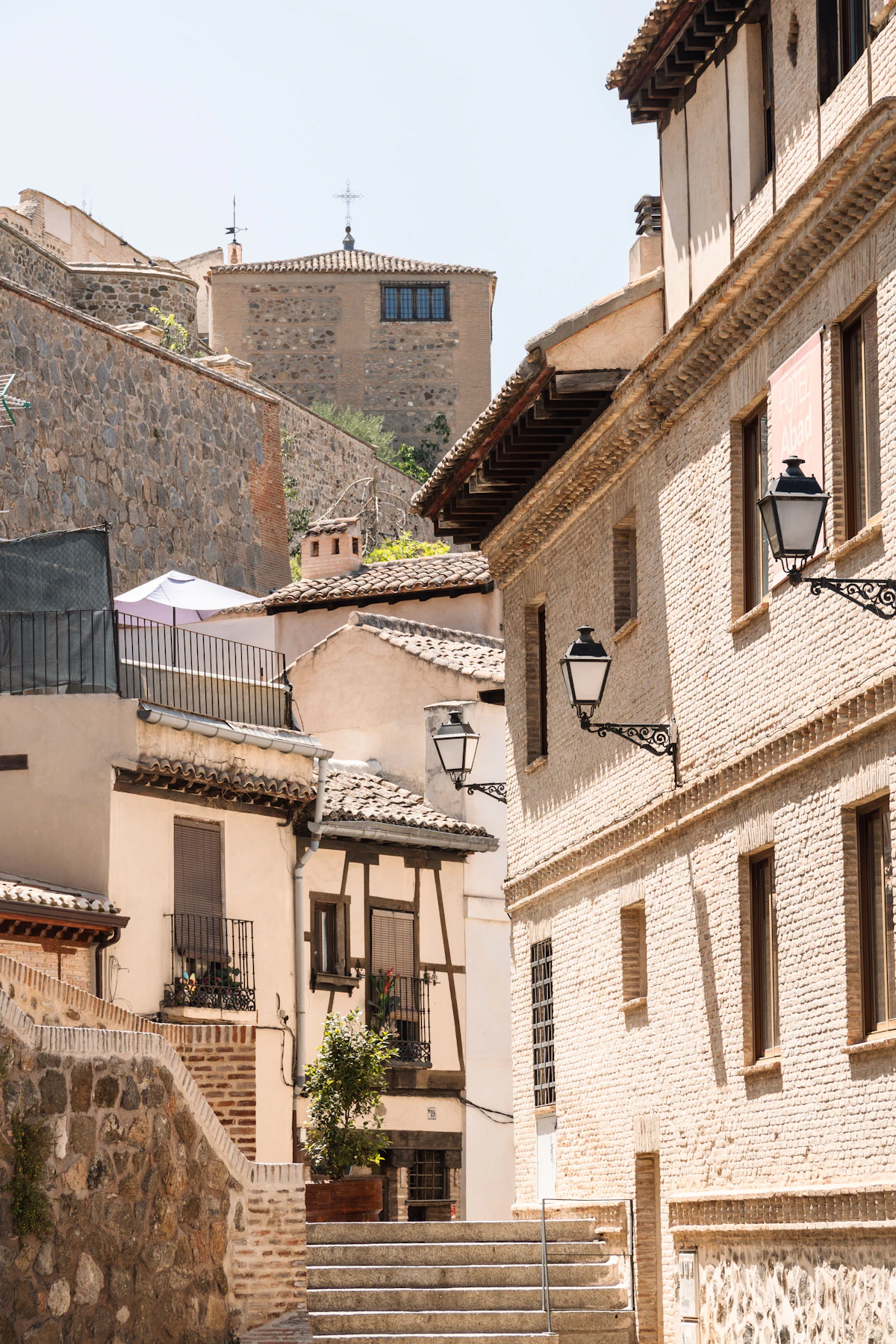
Toledo’s nickname isn’t just marketing. Walk a few blocks in the old town and you’ll pass a former mosque, a medieval synagogue, and a Gothic cathedral within minutes of each other. The cultural layering is visible everywhere, in the Mudéjar brickwork on church towers, in the Arabic-influenced geometric patterns on doors and walls, in the narrow winding streets that follow a layout older than the Reconquista.
Synagogue of Santa María la Blanca
This 12th-century synagogue was designed by Moorish architects for a Jewish congregation under Christian rule. That sentence alone tells you everything about Toledo’s complicated, fascinating history. Inside, 28 horseshoe arches sit atop octagonal columns in a white, airy space that feels more like a mosque than any synagogue you’ve seen before. It’s small, quiet, and one of the oldest synagogue buildings still standing in Europe.
Mosque of Cristo de la Luz
Built in 999 AD, this tiny mosque is one of the best-preserved examples of Moorish architecture in Spain. The interior uses intersecting arches inspired by the Great Mosque of Córdoba, and the original brickwork is still visible after more than a thousand years. When Toledo fell to Christian forces, they converted it to a church (as they did with most mosques), but the Islamic structure remains dominant.
Toledo Cathedral: A Gothic Masterpiece
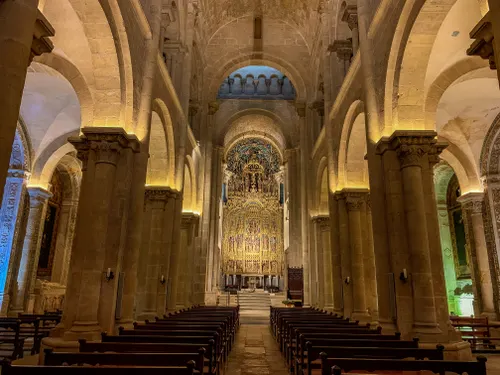
If the smaller religious sites represent Toledo’s diversity, the cathedral represents its Christian ambitions. Construction began in 1226 and took over 250 years to finish. The result is one of the great Gothic cathedrals of Europe, though it’s far less crowded than Notre-Dame or Seville’s cathedral.
The interior is dense with art and ornamentation. The choir stalls, carved from walnut, depict scenes from the conquest of Granada in painstaking detail. The Transparente, an 18th-century baroque altarpiece punched through the ceiling to let in natural light, is either genius or madness depending on your taste. Either way, it’s unforgettable. There’s a skylight carved directly through the Gothic vault above, and when the sun hits it right, the whole rear wall of the altar seems to glow.
El Greco’s painting “The Disrobing of Christ” hangs in the sacristy, along with works by Goya, Titian, and Caravaggio. For a small city, Toledo punches absurdly above its weight in art.
The Knights Templar Connection
Toledo’s history with the Knights Templar adds another layer of intrigue. The Templars were active in Toledo during the Reconquista, and their influence is woven into the city’s military and religious history. The nearby Castle of San Servando, visible from the old town, was a Templar stronghold. On Caravan’s Spain and Portugal tour, the tour director shares stories about the Templars’ role in the region, connecting the architecture and military history you’re seeing to the broader story of medieval Spain.
There’s something satisfying about hearing those stories while standing in the actual locations. It’s the difference between reading about history and walking through it.
El Greco’s City
Domenikos Theotokopoulos, the Greek-born painter known as El Greco, arrived in Toledo in 1577 and never left. His elongated figures, stormy skies, and intense emotional style were shaped by this city, and you can see why. Toledo has a dramatic quality, perched on that rocky promontory with the river wrapping around it, that practically begs for El Greco’s treatment.
The Museo del Greco (recently renovated) gives a good overview of his work and life in Toledo. But his paintings are scattered throughout the city, in churches, convents, and the cathedral. His masterpiece, “The Burial of the Count of Orgaz,” hangs in the Church of Santo Tomé and is worth the small admission fee. The lower half depicts a 14th-century funeral with portraits of Toledo’s real citizens. The upper half opens into a swirling, mystical vision of heaven. The contrast between the two halves is startling.
The Steel City
Toledo has been famous for its steel since Roman times. The city’s swordsmiths supplied blades to Roman legions, and later to the Spanish military. Toledano steel was considered the finest in Europe through the Renaissance. Today, you’ll see shops on every street selling swords, daggers, and armor. Most of it is decorative and tourist-oriented, but a few workshops still use traditional techniques. Look for the ones with actual forges in the back rather than mass-produced inventory up front.
Getting There and Getting Around
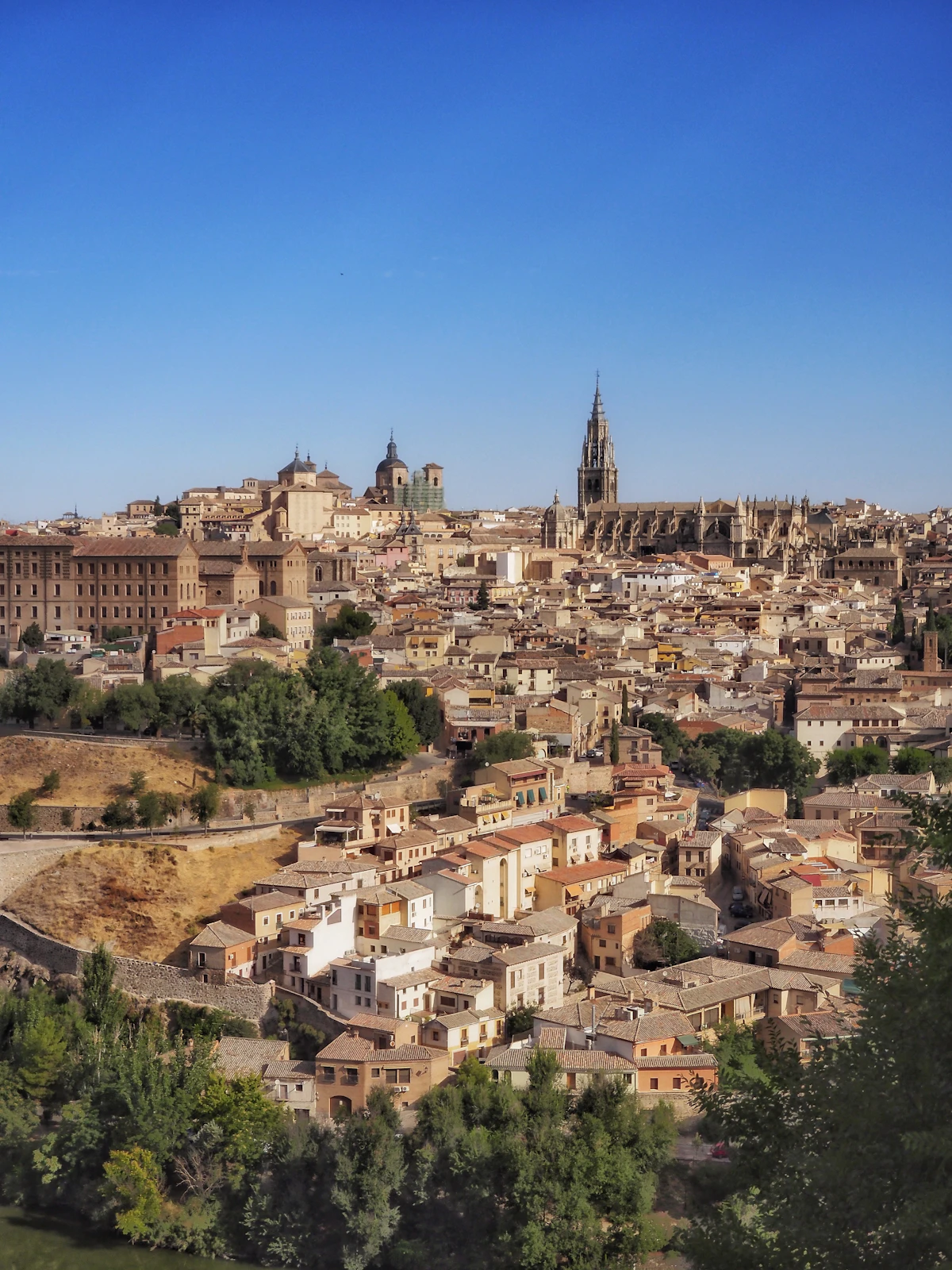
Toledo sits about 45 minutes south of Madrid, making it a natural day trip. The old town is entirely walkable, though “walkable” in Toledo means steep hills and cobblestone streets. Bring sturdy shoes.
On Caravan’s Spain and Portugal itinerary, Toledo is visited on the drive from Granada to Madrid (Day 8), with guided time at the cathedral and in the old town. It’s one of those stops that travelers consistently say surprised them the most. They came expecting a quick detour and left wishing they had more time.
Why You Shouldn’t Skip It
Toledo is the kind of place that rewards attention. It doesn’t have the flashy nightlife of Madrid or the beachfront energy of Barcelona. What it has is depth. Layer after layer of history visible in every stone wall and carved doorway, a skyline that hasn’t changed in centuries, and the feeling that you’ve stepped into something real and unpolished.
Explore the full 14-day Spain and Portugal tour with Caravan, which includes Toledo along with Lisbon, Seville, the Alhambra, Madrid, Valencia, and Barcelona. Everything is included from $2,895. Call 1-800-CARAVAN for details.