The Alhambra: What to Know Before You Visit Spain’s Greatest Moorish Palace
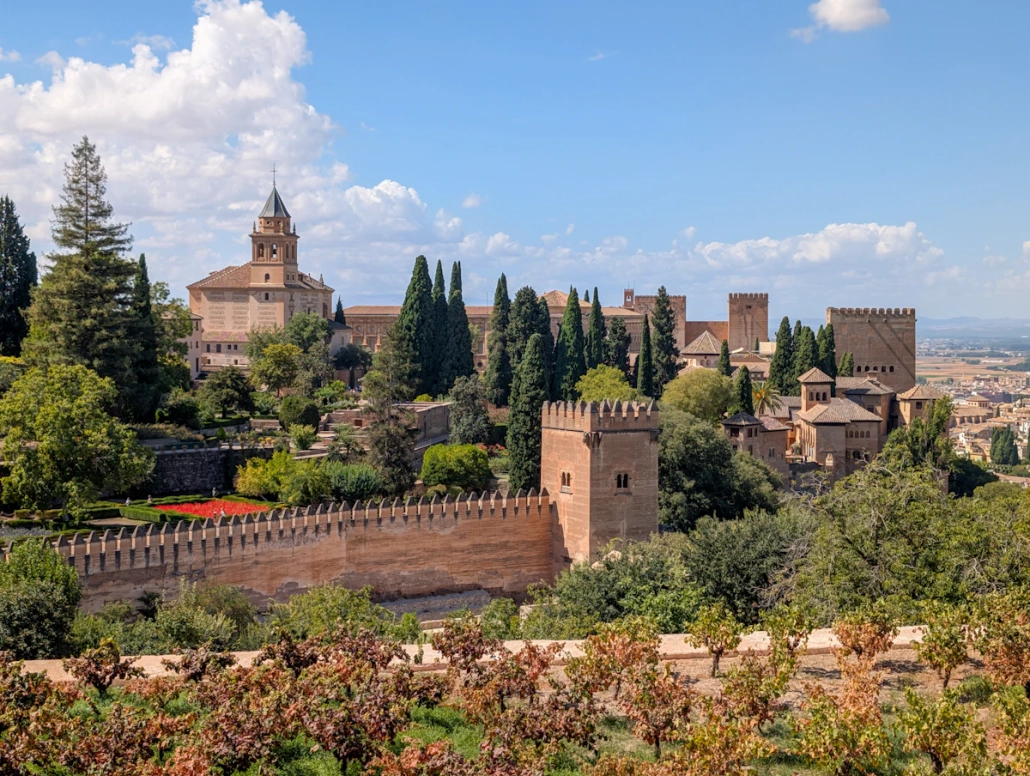
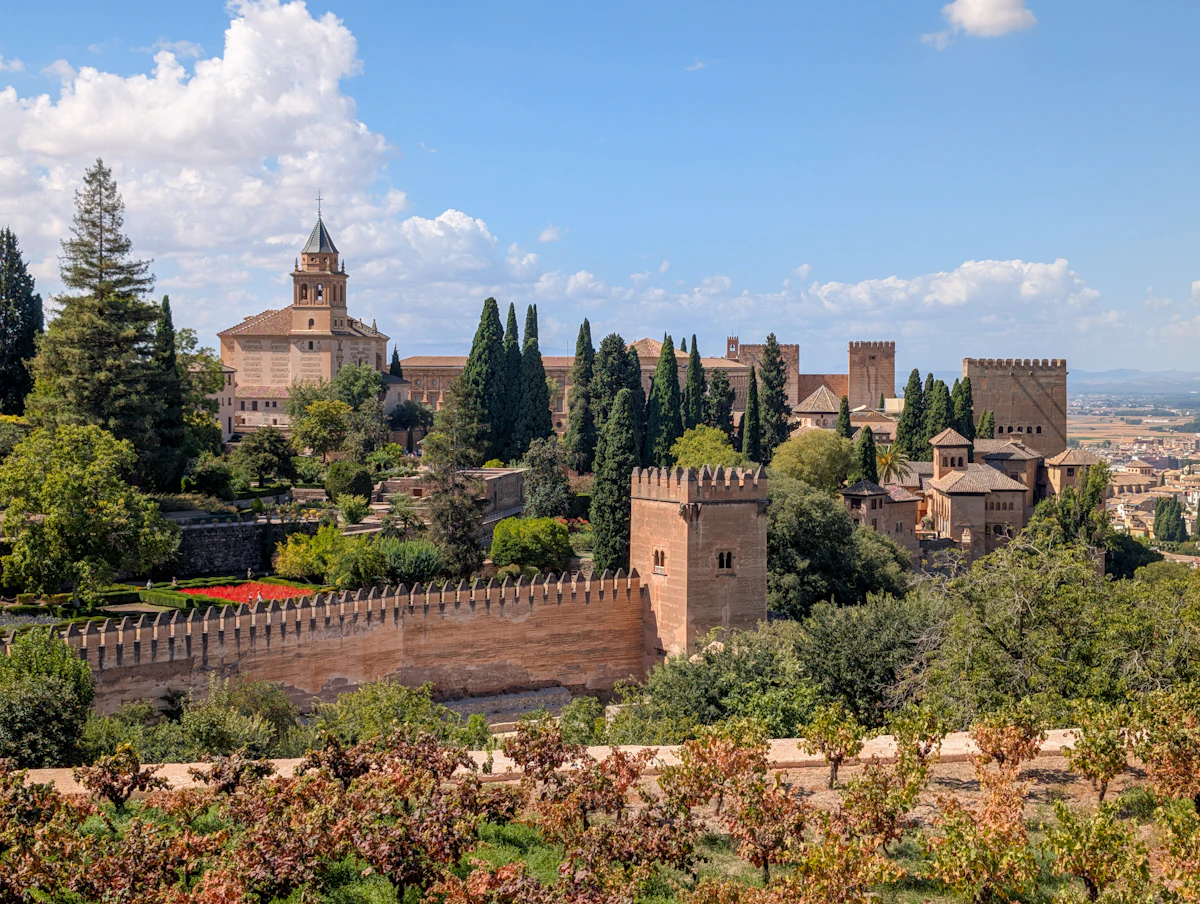
Few places in Europe hit you the way the Alhambra does. You walk through a modest entrance, round a corner, and suddenly you’re standing inside a palace that looks like it was carved from lace. The detail is almost impossible to process. Every surface, every archway, every ceiling is covered in geometric patterns and Arabic calligraphy so intricate that your eyes don’t know where to land first.
The Alhambra sits on a hill above Granada in southern Spain, and it’s been drawing visitors for centuries. Washington Irving wrote about it in 1832. Since then, it’s become the most visited monument in Spain, with nearly three million people walking through its gates every year. That popularity is well earned, but it also means you need to plan ahead.
A Quick History (Because It Actually Matters Here)
The Alhambra started as a small fortress in the 9th century, but the palace complex you see today was built mostly during the 13th and 14th centuries under the Nasrid dynasty. The Nasrids were the last Muslim rulers on the Iberian Peninsula, and they knew it. There’s a theory that the sheer beauty of the Alhambra was a kind of defiance, a statement that their civilization was extraordinary even as it was being pushed to its final corner of Spain.
In 1492, the Catholic Monarchs Ferdinand and Isabella took Granada, and the Alhambra became a Christian court. Charles V later demolished part of the complex to build a Renaissance palace smack in the middle of it. That palace is actually impressive on its own, but standing next to the Nasrid masterwork, it feels a bit like parking a pickup truck in a botanical garden.
The Nasrid Palaces: This Is Why You Came
The Nasrid Palaces are the heart of the Alhambra, and they’re the reason the site sells out weeks in advance. Your entry time is printed on your ticket, and they mean it. Miss your window by even a few minutes and you’re out of luck.
Inside, three main palaces flow into each other. The Mexuar was the administrative and judicial wing. The Comares Palace, centered around the Court of the Myrtles, was the official throne room area. And the Palace of the Lions, with its famous fountain surrounded by twelve marble lions, was the private royal quarters.
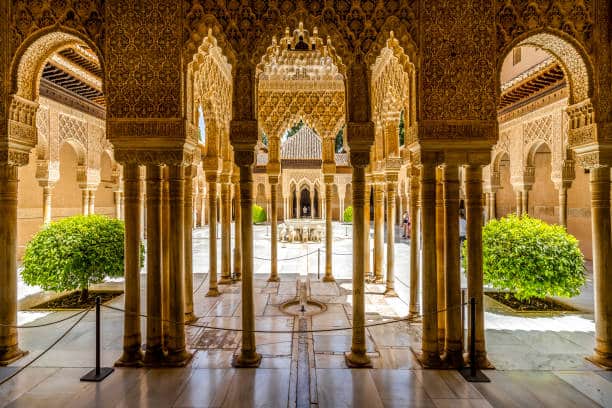
The Court of the Lions
This courtyard gets most of the photographs, and for good reason. The proportions are perfect. Slender marble columns support arches covered in muqarnas, those honeycomb-like carvings that seem to drip from the ceiling. The central fountain dates to the 14th century and was recently restored. Water channels extend from it in four directions, a reference to the four rivers of paradise described in Islamic tradition.
The Hall of the Abencerrajes
Look up when you enter this room. The star-shaped muqarnas ceiling is one of the most photographed features in all of Spain. The geometry is based on the Pythagorean theorem, and the way light filters through the small windows at the base of the dome changes the color and mood throughout the day. Morning light tends to be softer. By afternoon, the shadows deepen and the whole thing takes on an amber glow.
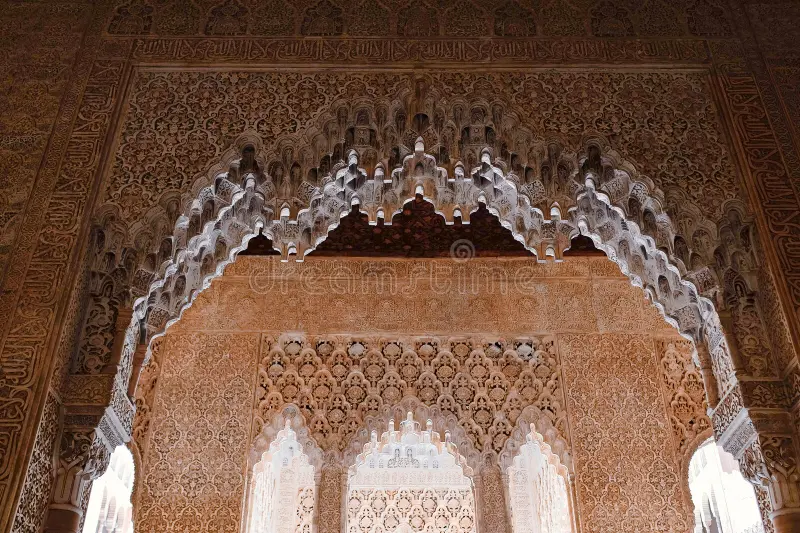
There’s also a grim legend attached to this room. The Abencerrajes were a noble family reportedly massacred here during a power struggle. The rusty stains on the marble fountain basin? Locals will tell you it’s blood. Geologists say it’s iron oxide. Believe whichever version you prefer.
The Generalife Gardens
After the intensity of the Nasrid Palaces, the Generalife feels like exhaling. These gardens were the summer residence of the Nasrid sultans, built on the hillside just above the main complex. The layout is all about water. Narrow channels, fountains, and cascading pools were designed to cool the air and create ambient sound, basically medieval air conditioning and a white noise machine in one.
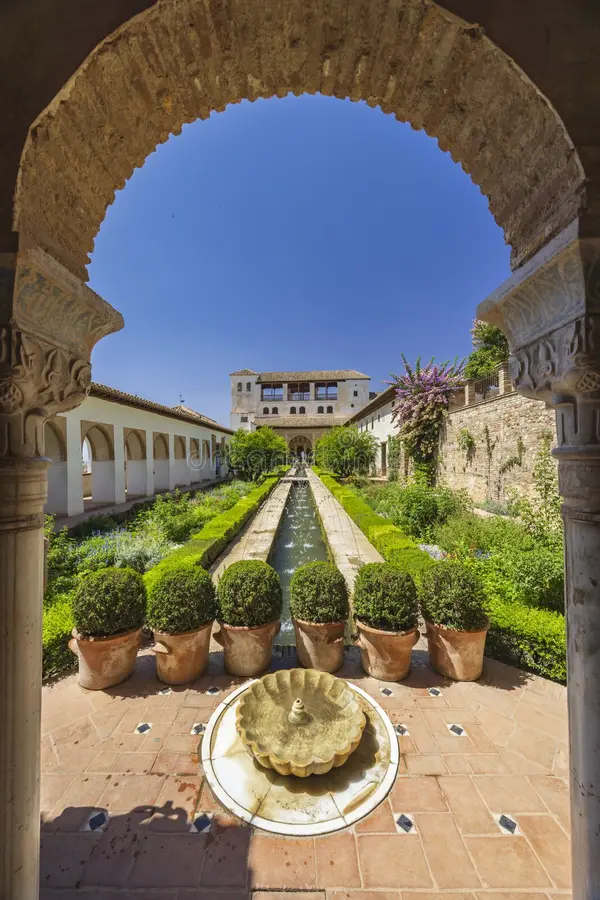
The Patio de la Acequia is the centerpiece, a long rectangular pool flanked by arched water jets and bordered by roses, hedges, and cypress trees. It’s a good place to sit for a few minutes and let the palace experience settle in.
Practical Tips That Will Save You Headaches
Book your tickets early. The Alhambra limits daily visitors, and Nasrid Palace entry times sell out fast, sometimes four to six weeks in advance during peak season (April through October). You can buy tickets through the official Patronato de la Alhambra website.
Wear comfortable shoes. The complex covers about 26 acres, and you’ll be on your feet for two to three hours minimum. Some paths are cobblestone or packed dirt, and there are hills.
Go in the morning if you can. The light is better for photos, the crowds are slightly thinner, and you won’t be fighting the afternoon heat, which in Granada can top 100°F in summer.
Don’t skip the Alcazaba. The oldest part of the complex is this military fortress at the western tip. Climb the Torre de la Vela for a panoramic view of Granada, the Sierra Nevada mountains, and the surrounding plains. On a clear day, you can see all the way to the distant hills of the Alpujarras.
Where to Stay in Granada
Your hotel matters more than you might think in Granada, because waking up to an Alhambra view is an experience all on its own. On Caravan’s Spain and Portugal tour, guests stay at the Hotel Barceló Carmen Granada, which has a rooftop terrace with a direct sightline to the Alhambra. Watching the palace light up at night from that terrace, drink in hand, is one of those quiet moments that sticks with you.
Caravan’s tour also includes a fully guided visit to the Alhambra with tickets and a professional tour director already arranged. If you’ve ever dealt with the stress of scoring Nasrid Palace tickets on your own, you know how valuable that is. The 14-day Spain and Portugal itinerary covers Lisbon, Seville, Córdoba, Toledo, Madrid, Valencia, and Barcelona too, all included from $2,895.
The Bottom Line
The Alhambra deserves its reputation. It’s not one of those overhyped tourist sites that disappoints in person. If anything, it’s the opposite. Photos can’t capture the scale, the silence inside the Nasrid Palaces, or the way the carved plaster walls seem to shift depending on the light. Go with a plan, give yourself time, and don’t rush it.
Ready to see it for yourself? Explore Caravan’s Spain and Portugal tour or call 1-800-CARAVAN to learn more about visiting the Alhambra as part of a fully guided 14-day itinerary.