Day of the Dead in Oaxaca: Traditions, Dates and What to Expect
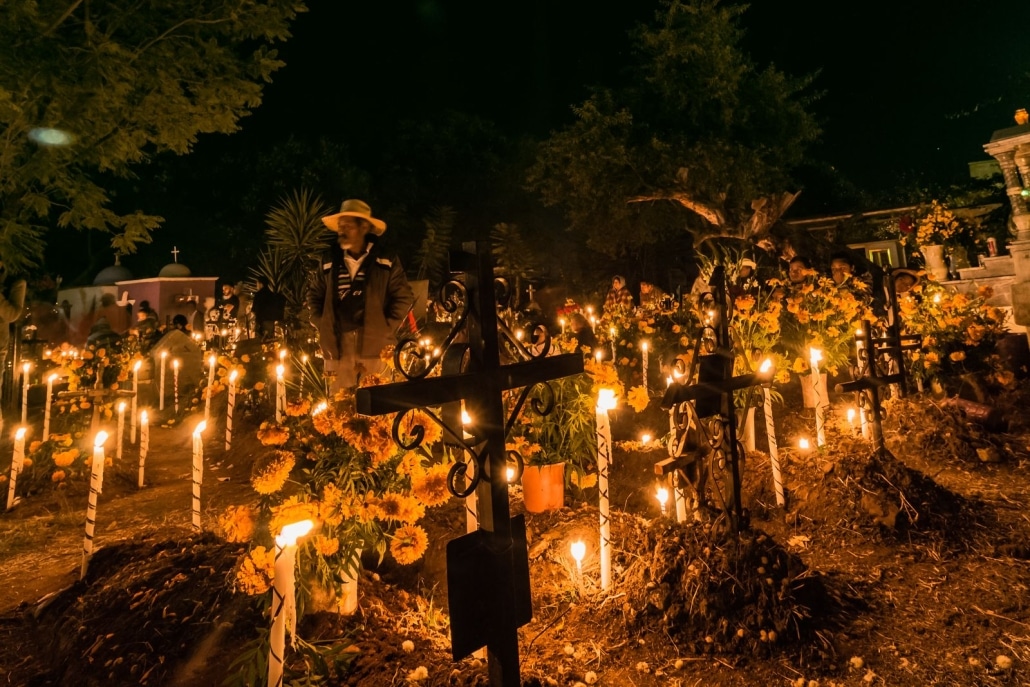
Every autumn, Oaxaca fills with orange marigolds, flickering candles and the sweet smoke of copal incense. Day of the Dead in Oaxaca, or Día de los Muertos, is one of the most moving celebrations in Mexico. This colonial city in the southern highlands is known for keeping its traditions close to home. Families build altars, decorate graves and spend long nights with the memories of the people they have lost.
If you are thinking about seeing it for yourself, this guide covers when it happens, what the traditions mean, what to eat and how to be a respectful guest.
When Is Day of the Dead in Oaxaca?
Day of the Dead takes place at the very start of November, right after Halloween. It lines up with All Saints' Day and All Souls' Day on the Catholic calendar. In many Oaxacan homes, the first day is set aside to remember children who have died, and the next day honors adults.
In practice, the season feels much longer than a couple of days. Markets begin filling with flowers, candles, sugar figures and special breads in the last weeks of October. Families build their altars in the days before the holiday. Different towns often hold their cemetery vigils on different nights, so the festivities can stretch across several days.
Local schedules vary from village to village, so ask your hotel or a local guide what is happening during your stay. Rooms in Oaxaca City also tend to fill up early for this time of year, so it pays to plan ahead.
The weather is usually pleasant. Caravan's climate chart for Oaxaca shows average highs of 79°F in both October and November, with average lows of 51°F in November. The rainy season is winding down, and rainfall drops sharply from October to November. Bring a light jacket for chilly nights in the cemeteries.
What Happens During Dia de los Muertos in Oaxaca
Day of the Dead is not a Mexican version of Halloween. It is a time to remember loved ones, welcome their spirits home and celebrate their lives. The holiday blends Indigenous beliefs about death with Catholic traditions brought by the Spanish. That mix runs especially deep in Oaxaca, a region with strong Zapotec and Mixtec roots. Similar blends of faith appear across Latin America, as you can see in these Catholic-Indigenous traditions of Peru.
Ancient cultures across Mexico held rich beliefs about the afterlife, from the Zapotecs who built Monte Albán above the Oaxaca Valley to the Maya, whose temples still stand in the Yucatán. If ancient Mexico fascinates you, read these interesting facts about the Pyramid of the Magician at Uxmal.
Ofrendas: Altars for the Departed
The heart of the holiday is the ofrenda, a home altar built to welcome the dead. Families set out photos of loved ones along with candles, flowers, fruit, bread, chocolate and the favorite foods and drinks of the people they are honoring. Many altars include salt, water and copal incense. In Oaxaca, altars are often framed with sugarcane arches and layered with marigolds.
You will also see altars in hotel lobbies, shops, churches and public squares. Some streets feature tapetes de arena, detailed tapestries made from colored sand, seeds and flower petals.
Marigolds (Cempasúchil)
Bright orange marigolds, called cempasúchil, are everywhere during the season. Their strong scent and vivid color are said to help guide spirits home. Families scatter petals to make paths from the street to the altar. Purple cockscomb flowers often appear alongside them, adding a deep red contrast.
Cemetery Vigils
For many Oaxacan families, the most important moment is the vigil at the cemetery. Relatives clean and decorate graves with flowers, candles and offerings. Then they stay into the night, sharing food, telling stories and sometimes listening to music. The mood can be peaceful, joyful and emotional all at once. A cemetery glowing with candlelight is something many visitors never forget.
Comparsas
Comparsas are lively costumed processions that wind through neighborhoods and villages. Participants wear masks and elaborate costumes, often dressed as skeletons, devils or playful characters, while brass bands play. Some comparsas poke fun at local life and politics. They show the celebratory side of the holiday, a reminder that remembering the dead is also a way of celebrating life.
Oaxaca's Day of the Dead Foods
Food is at the center of Day of the Dead. Families cook the dishes their loved ones enjoyed, place them on the altar and share them with the living. Here are some flavors you are likely to find:
- Pan de muerto: In Oaxaca, this "bread of the dead" is often a rich egg bread. Loaves are commonly topped with a small decorated face, and you will see them stacked high in bakeries and markets.
- Mole negro: Oaxaca is famous for its moles, and the dark, complex mole negro is a holiday favorite. It is made with chiles, spices, seeds and chocolate, and preparing it can take days.
- Tamales: Oaxacan tamales are often wrapped in banana leaves and filled with mole. They are easy to share and show up on many altars.
- Hot chocolate: Oaxaca's dark chocolate is often ground with sugar and cinnamon and whipped into a frothy drink. It pairs perfectly with pan de muerto.
- Mezcal: This agave spirit is closely tied to Oaxaca. A small glass is often left on the altar for a loved one who enjoyed it.
- Sugar and chocolate skulls: Colorful calaveras, sometimes decorated with names, are sold in markets and given as gifts.
Many of these foods rely on corn dough, or masa, a tradition that reaches back to ancient Mesoamerica. Cooks there learned to process maize into masa long before the Spanish arrived, and that knowledge still shapes the tamales and tortillas on Oaxacan tables today.
Etiquette: How to Visit Respectfully
Day of the Dead draws visitors from around the world, but it is first a family and religious observance. A little care goes a long way. Keep these tips in mind:
- Ask before you take photos. Always ask permission before photographing people, altars or graves. If someone says no, smile and move on.
- Skip the flash. Bright flashes disrupt quiet vigils. Keep your camera settings low and your phone screen dim.
- Look, but don't touch. Never touch, move or take anything from an ofrenda or a grave.
- Watch your step. Cemeteries can be crowded and dark. Stay on paths and avoid stepping on or leaning against graves.
- Keep your voice low. Laughter and music are part of the night, but follow the lead of the families around you.
- Think twice about costumes. Face painting is common at public events and parades. In cemeteries, though, simple and respectful clothing is the better choice.
- Accept invitations warmly. If a family invites you to sit with them or offers you food, it is a kind gesture. A simple thank-you means a lot.
- Shop local. Buy flowers, bread and crafts from local vendors and artisans. Your purchases help support the families who keep these traditions alive.
Going with a local guide is one of the easiest ways to understand what you are seeing and to visit in a way that feels welcome.
Where to See Day of the Dead Around Oaxaca City
Celebrations happen all over the Oaxaca Valley, and each place has its own character. Here are some areas travelers often explore:
The Historic Center
Oaxaca's historic center is a UNESCO World Heritage Site and a wonderful place to start. Stroll around the main square and the area near the Santo Domingo Temple to see decorated altars, sand tapestries and street performances. The city's traditional markets overflow with marigolds, breads and sugar skulls in the days before the holiday.
The Panteón General
The city's main cemetery is decorated with candles and flowers during the season. It is within reach of the historic center, which makes it a convenient first cemetery visit.
Santa Cruz Xoxocotlán
Just outside the city, the cemeteries of Xoxocotlán are known for their candlelit all-night vigils. This is one of the most visited spots, so expect crowds and be extra mindful of the families gathered there.
Jalatlaco and the Etla Valley
The charming Jalatlaco neighborhood, with its colorful streets, often hosts comparsas and decorated altars. Towns in the Etla Valley, such as San Agustín Etla, are well known for their festive comparsas, with music and costumes that can carry on late into the night.
Smaller Villages
In smaller villages such as Teotitlán del Valle, known for its colorful handwoven rugs, observances tend to be quieter and more centered on family. These are places to be an especially gentle and respectful observer.
See Oaxaca With Caravan
Day of the Dead is just one window into Oaxaca. The city's food, crafts and ancient sites are part of daily life all year long. Founded in 1529, Oaxaca blends Spanish charm with Indigenous heritage, and it is often called the romantic heart of Mexico.
Caravan's Mexico's Magical Oaxaca tour is an eight-day, fully guided trip that includes most meals, all hotels and all activities. You will start in Mexico City, where you will visit the Oaxaca Hall at the National Museum of Anthropology to see treasures from Monte Albán and Mitla. After stops in Puebla and the Great Pyramid of Cholula, you will enjoy a four-night stay in Oaxaca at a centrally located hotel just blocks from the Santo Domingo Temple.
From there, you will:
- Explore the ancient Zapotec ruins of Monte Albán, perched high on a mountain plateau
- Visit the historic center and the traditional marketplace
- Meet the weavers of Teotitlán del Valle and see the carved stone mosaic walls of Mitla
- Sample mezcal at a distillery and see El Tule, a 2,000-year-old cypress tree
- Watch a black pottery demonstration in San Bartolo Coyotepec
- Enjoy free time to shop for alebrijes or indulge in Oaxaca's famous dark chocolate
Caravan has been run by the same family since 1952, and it does not sell optional activities, so everything listed on the itinerary is included. Check current departure dates and availability on the tour page, or call 1-800-CARAVAN or 312-321-9800 to talk with a Caravan representative.
