Córdoba’s Mosque-Cathedral: Where 850 Marble Columns Tell a Thousand-Year Story
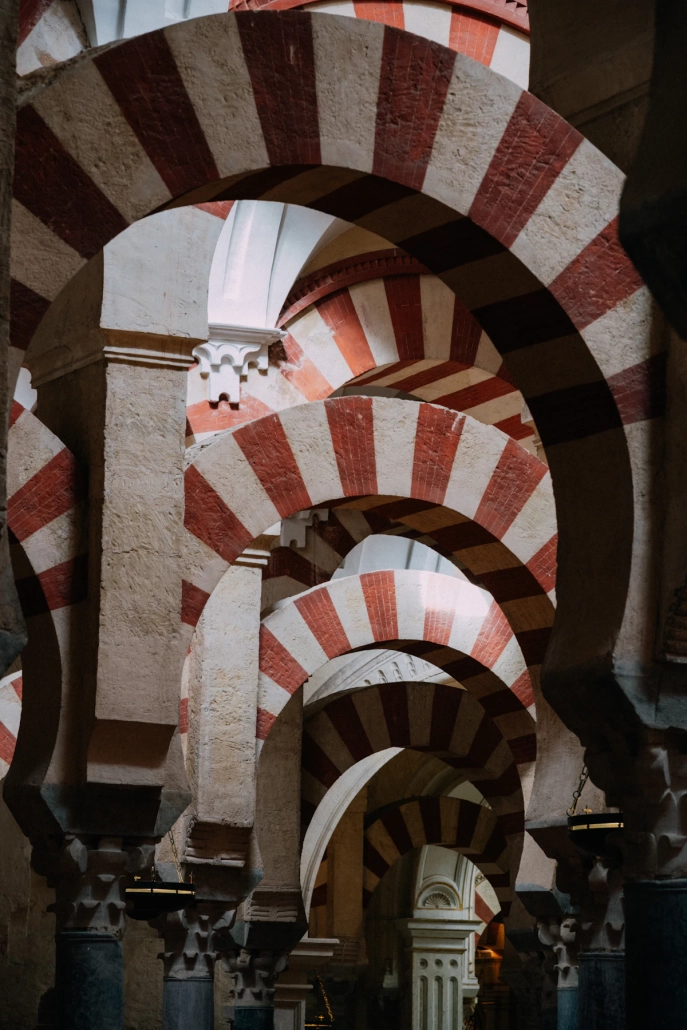
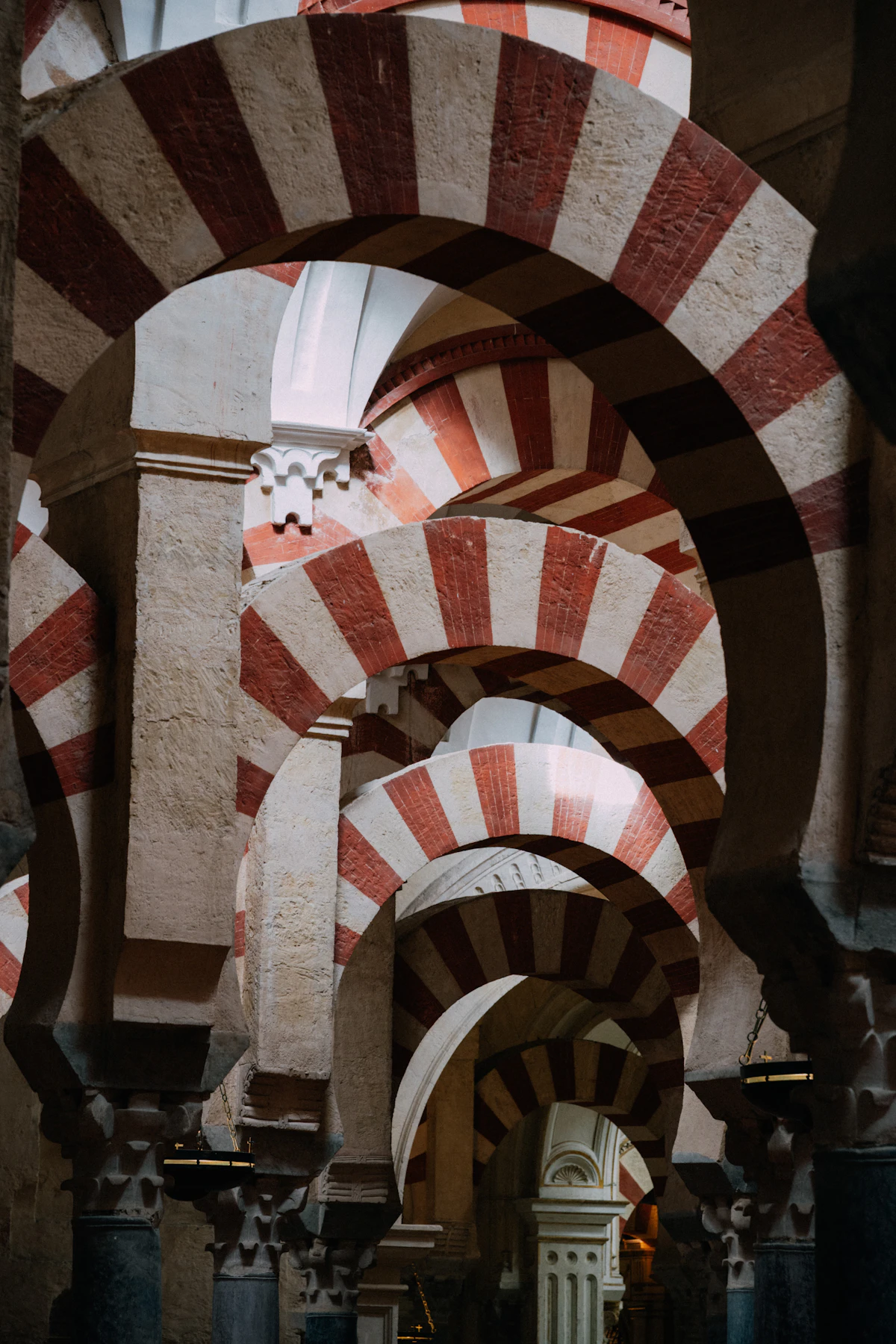
The first time you walk into the Mezquita of Córdoba, your brain takes a second to catch up with your eyes. You step through a heavy wooden door, and suddenly you’re standing in a forest of columns. Red and white double arches stretch in every direction, row after row, creating a visual rhythm that seems to go on forever. There are 856 columns in all, made from jasper, onyx, marble, and granite, many of them recycled from Roman temples and Visigothic churches.
And then, right in the middle of all that, you notice a full-blown Renaissance cathedral. Just sitting there. Inside the mosque. If that sounds architecturally insane, well, it is. But it’s also one of the most fascinating buildings in the world precisely because of that collision.
How a Mosque Became a Cathedral (and Kept Being Both)
Córdoba’s story starts in 711, when Moorish forces crossed the Strait of Gibraltar and swept through the Iberian Peninsula. By the 8th century, Córdoba was the capital of Al-Andalus and one of the largest, most advanced cities in Europe. At its peak in the 10th century, the city had a population of roughly 500,000, with paved streets, public lighting, running water, and hundreds of public baths. Paris, by comparison, was a muddy village of maybe 20,000.
The Great Mosque
Abd al-Rahman I began building the Great Mosque in 784 on the site of a Visigothic church (which itself had been built over a Roman temple). The double-tiered horseshoe arches, alternating red brick and white stone, were an engineering solution to a height problem. The columns recycled from earlier buildings were too short to create the soaring interior the architects wanted, so they stacked a second tier of arches on top. The result is one of the most recognizable architectural features in Islamic art.
The mosque was expanded three times over the next two centuries, each time growing larger and more elaborate. The mihrab, the prayer niche indicating the direction of Mecca, is a masterpiece of Byzantine-influenced mosaic work. Gold and colored glass tesserae cover the dome above it in intricate geometric and floral patterns. Caliph al-Hakam II reportedly requested the mosaics from the Byzantine emperor, who sent both materials and craftsmen to complete the work.
The Cathedral Insertion
When Ferdinand III of Castile captured Córdoba in 1236, the mosque was consecrated as a cathedral. For nearly 300 years, the Christians mostly left the structure alone, worshipping inside the existing space. Then, in the 16th century, the cathedral chapter decided to build a full Gothic and Renaissance cathedral nave right in the center of the mosque.
Even Charles V, the Holy Roman Emperor who approved the project, reportedly regretted it. When he visited Córdoba and saw the construction, he supposedly said, “You have destroyed something unique to build something commonplace.” Whether that quote is entirely accurate is debated, but the sentiment rings true. The cathedral is objectively beautiful, with soaring vaulted ceilings, elaborate choir stalls, and a stunning mahogany altarpiece. But surrounded by the Moorish arches on all sides, it feels intrusive. Two magnificent buildings occupying the same space, neither one quite complete because of the other.
That tension is exactly what makes the Mezquita so compelling. It’s not a resolved, harmonious space. It’s a building that contains a visible argument between civilizations, frozen in stone.
What to Look For Inside
The Hypostyle Hall
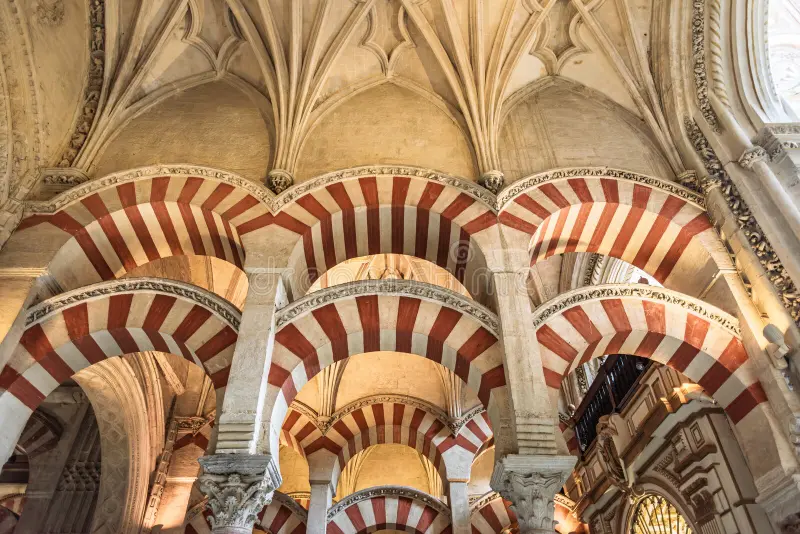
Spend time in the older sections of the mosque, away from the cathedral insertion. Stand at one end and look down a row of columns. The arches create a perspective effect that seems to multiply them infinitely. The lighting is dim and warm, filtered through small openings and lanterns. In the original design, the south wall was open to the courtyard, letting in natural light and breeze. That wall has been closed since the Christian conversion, which changed the interior atmosphere dramatically. What was once a bright, airy prayer hall became something more mysterious and enclosed.
The Mihrab
The mihrab is at the far end of the al-Hakam II expansion and is the most ornamented section of the entire building. The horseshoe arch framing the entrance is covered in gold mosaic. Above it, an octagonal dome is constructed from interlocking ribs, a structural innovation that predated similar European Gothic techniques by several centuries. This wasn’t just decoration. Córdoba’s architects were solving real engineering problems in ways that wouldn’t become common in European architecture for another 300 years.
The Courtyard of the Orange Trees
Before entering, you’ll pass through the Patio de los Naranjos, a walled courtyard planted with orange trees in neat rows that mirror the column layout inside. In the mosque’s original design, this courtyard was part of the worship space, with the tree rows continuing the visual lines of the interior columns. Fountains for ritual washing still dot the courtyard.
Córdoba Beyond the Mosque
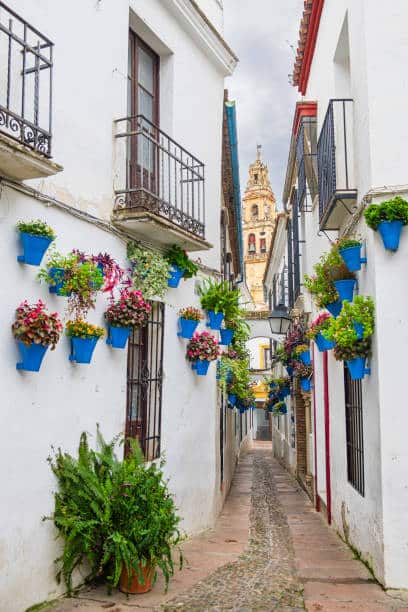
The city itself is worth exploring, even if you only have a few hours. The Judería (Jewish Quarter) is a web of whitewashed streets, flower-draped courtyards, and small plazas. The Calleja de las Flores, a narrow alley opening onto a small square with a view of the cathedral bell tower framed by hanging flower pots, is one of the most photographed spots in Andalusia for good reason.
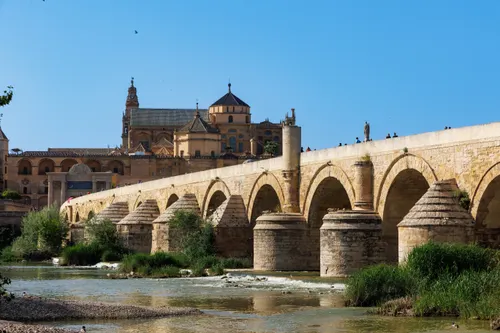
The Roman Bridge across the Guadalquivir River dates to the 1st century BC and offers a postcard view of the Mezquita from the south bank. The bridge was the only river crossing in Córdoba for nearly 2,000 years, and walking across it at sunset, with the mosque silhouetted against the sky, is one of those simple pleasures that costs nothing and stays with you.
Visiting with Caravan
On Caravan’s Spain and Portugal tour, Córdoba is visited on Day 6, on the route between Seville and Granada. The tour includes a guided visit to the Mosque-Cathedral with a professional tour director who can walk you through the layers of history in a way that brings the building to life. Context matters in a place like this. Without it, you see beautiful arches. With it, you see a thousand years of conquest, coexistence, and cultural collision encoded in every stone.
The full 14-day itinerary starts in Lisbon and ends in Barcelona, with all hotels, most meals, and guided activities included from $2,895. It’s one of Caravan’s most popular European routes, and the Córdoba stop is a consistent highlight.
Ready to walk through those 856 columns yourself? Visit caravan.com or call 1-800-CARAVAN to explore the tour.