Barcelona Beyond the Beaches: Gaudí, Gothic Quarters, and Great Food
Barcelona is one of those cities that everyone thinks they know. Beaches, Gaudí, sangria, football. And sure, all of that is real. But spend even a single full day here and you realize the city is denser, stranger, and more rewarding than its postcard version suggests. The architecture alone could keep you busy for a week, and the food scene has quietly become one of the best in Europe.
As the final stop on Caravan’s Spain and Portugal tour, Barcelona is a fitting exclamation point after two weeks crossing the Iberian Peninsula. You arrive having already seen Moorish palaces, Gothic cathedrals, and Roman ruins. Barcelona takes all of that history and adds a distinctly Catalan twist.
Gaudí: The Architect Who Broke Every Rule
Antoni Gaudí spent most of his career in Barcelona, and the city is essentially an open-air gallery of his work. His buildings don’t look like they were designed. They look like they grew, as if someone planted an idea in the ground and this is what came up.
Sagrada Família
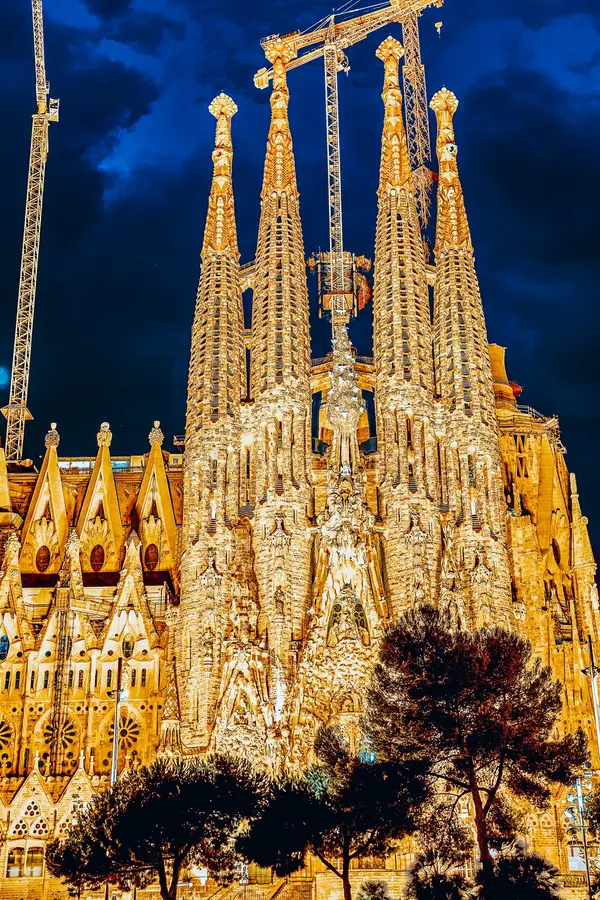
The Basílica de la Sagrada Família is Gaudí’s unfinished masterpiece, under construction since 1882 and still not done. The target completion date is 2026, the centenary of Gaudí’s death, though timelines have shifted before.
From the outside, it’s overwhelming. The Nativity façade (the one Gaudí completed) is encrusted with stone figures, plants, and animals that seem to spill off the building. The Passion façade, finished later by sculptor Josep Maria Subirachs, is angular and stark by comparison.
Inside is where the Sagrada Família becomes something else entirely. Gaudí designed the interior columns to branch like trees, creating a canopy effect that turns the nave into a stone forest. Stained glass windows on the east side cast blue and green light in the morning; the west side glows orange and red in the afternoon. The effect is not subtle. It’s genuinely disorienting in the best way.
Casa Batlló
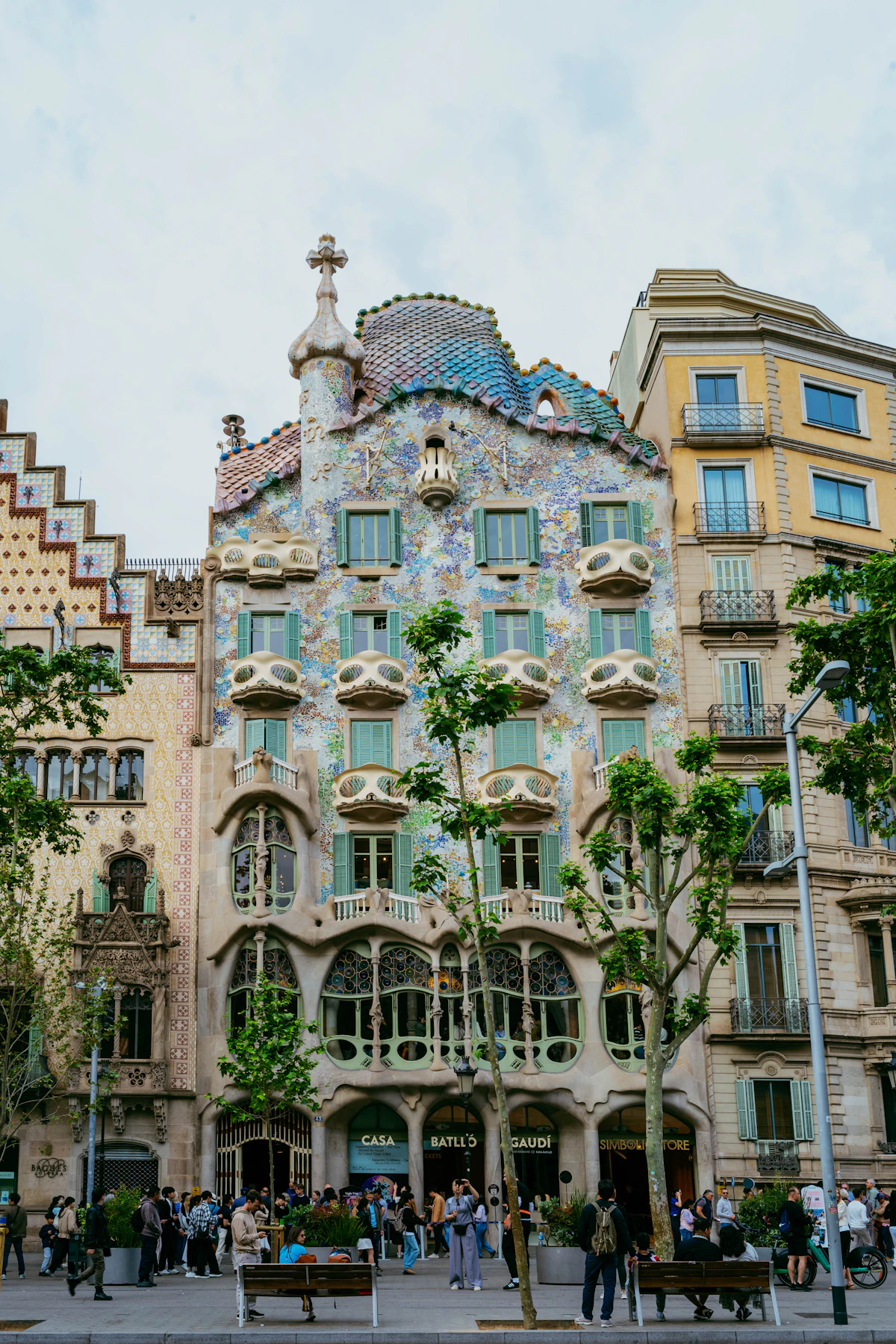
On the Passeig de Gràcia, Casa Batlló is Gaudí’s renovation of an 1877 apartment building. The façade is covered in broken ceramic tiles (trencadís) that shimmer in shades of blue and green. The roof is shaped like a dragon’s back, with tiles resembling scales and a cross-topped tower that’s said to represent Saint George’s lance. Inside, every surface curves. Door handles are molded to fit the human hand. Window frames undulate. Light wells are tiled in graduating shades of blue so that natural light distributes evenly from top to bottom.
It’s residential architecture treated as sculpture, and it was built for a real family to actually live in. That’s the part that gets me.
La Pedrera (Casa Milà)
A few blocks up the same street, La Pedrera (officially Casa Milà) was Gaudí’s last private residence before he devoted himself entirely to the Sagrada Família. The wavy stone façade earned it the nickname “the quarry” from unimpressed locals when it was built in 1912. The rooftop, with its surreal chimneys shaped like medieval knights, is the highlight. Visit in the late afternoon when the light catches the white mosaic surfaces and the city spreads out below.
The Gothic Quarter: 2,000 Years in 20 Blocks
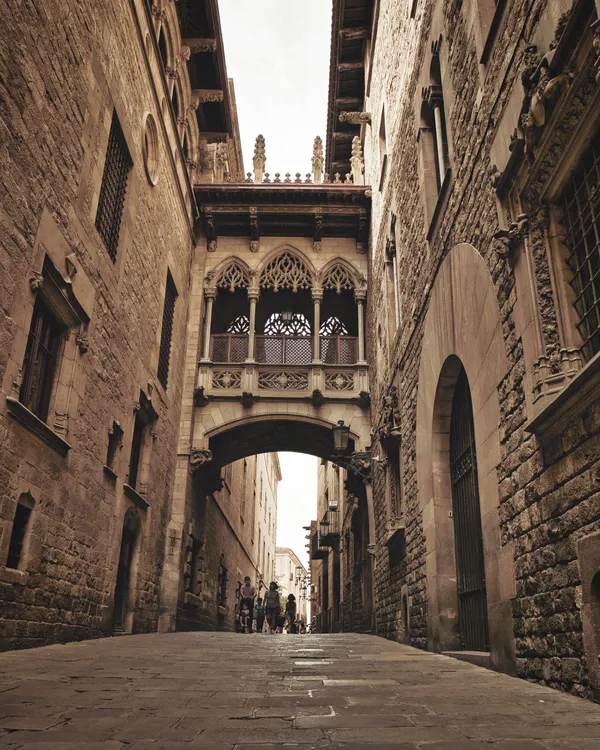
The Barri Gòtic (Gothic Quarter) sits on the bones of Roman Barcino. You can still see sections of the original Roman wall, including a 1st-century aqueduct arch, tucked between medieval buildings. The streets here are so narrow that balconies on opposite sides nearly touch.
The Cathedral of Barcelona (not to be confused with the Sagrada Família) anchors the quarter. Its 14th-century Gothic façade overlooks a plaza where people gather in the evenings. Inside, 13 white geese wander the cloister garden, one for each year of the martyrdom of Saint Eulalia, Barcelona’s patron saint.
Plaça del Rei is the medieval royal square where Ferdinand and Isabella reportedly received Columbus after his first voyage to the Americas. The Palau Reial Major, the royal palace, frames one side with a massive arched hall built in the 14th century. It’s easy to miss if you’re not looking for it, but the sense of scale when you step inside is striking.
La Boqueria and the Food Scene
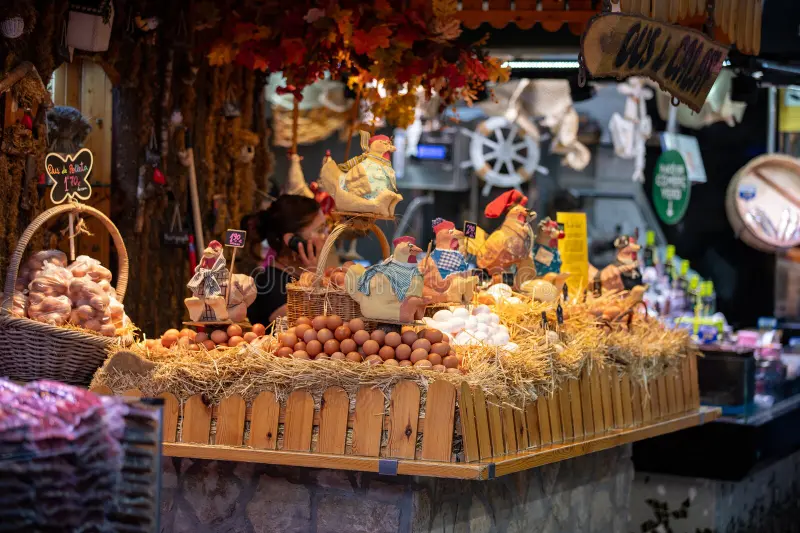
Mercat de la Boqueria, just off La Rambla, has been a public market since 1836, though trading on that site goes back to the 13th century. It’s touristy now, no question, but the quality is still real. The jamón ibérico vendors will slice paper-thin pieces for tasting. The seafood stalls have species you won’t recognize. The juice stands are everywhere and genuinely good.
For a sit-down meal, head to the bars at the back of the market or into the side streets of El Raval or El Born. Barcelona’s food culture leans heavily on seafood, especially along the Barceloneta waterfront. Fideuà, a noodle-based dish cooked like paella, is a local specialty worth seeking out. Pair it with a glass of cava, Catalonia’s sparkling wine, which is made just outside the city in the Penedès region.
Staying in Barcelona
On Caravan’s tour, guests stay at the Hotel Labtwentytwo Barcelona. Having a comfortable base matters after a full day of walking Gaudí’s masterworks and getting purposefully lost in the Gothic Quarter. The tour includes guided visits to Casa Batlló, La Pedrera, and the Sagrada Família on Day 13, with free time to explore the food markets and side streets on your own.
A Fitting Finale
After 13 days crossing Portugal and Spain, Barcelona feels like the right ending. It’s forward-looking and creative, a city that builds on its Roman and medieval past without being trapped by it. Gaudí’s buildings alone would justify the stop, but the food, the energy, and the particular quality of Mediterranean light on the waterfront make it something more.
The full Spain and Portugal tour with Caravan runs 14 days from $2,895, covering Lisbon, Seville, Córdoba, Granada, Toledo, Madrid, Valencia, and Barcelona with everything included. Call 1-800-CARAVAN or visit caravan.com to book.