The Mystery of Juanita Mummy: An Inca “Ice Maiden”
Peru is a country with a long, deep history–one that doesn’t stay buried. Every so often, Peruvians make headlines for unearthing a unique kind of window to the past: mummies.
One of those mummies—Momia Juanita—has a story that’s captured imaginations since her discovery in 1995.
The Mystery of Inca Mummies: Uncovering The Past
Momia Juanita, or “The Juanita Mummy,” is a body frozen in time.
The earliest Inca civilization began in the 12th century. The Inca Empire was officially created in 1438, and it reigned until 1533. For almost 100 years, the Incas conquered and dominated most of Peru, spreading their culture far and wide.
Today, much of that culture has been lost.
Inca mummies—buried Incas preserved in ice—leave modern scholars clues about that long-lost civilization.
What—Or Who—Is Mummy Juanita?
Juanita Mummy is an “Ice Maiden,” a frozen, preserved body from the 15th century, found on Mount Ampato—a dormant volcano in the Peruvian Andes. Upon investigation, researchers discovered the recovered corpse was a teenage girl from the Inca Empire.
The researchers called the body “Juanita Mummy.” Juanita is a name used in many Spanish-speaking cultures for an unknown woman, like “Jane Doe.”
After finding Juanita in 1995, it would take decades for research to reveal all the details of her identity.
Early on, though, it became clear that she was sacrificed in a Qhapaq hucha ritual.
How The Mountain Ice Mummified The Body
While many Incas died in ritual sacrifices throughout the Kingdom’s history, few bodies have been preserved. Mummification wasn’t part of the Inca tradition.
Instead, Juanita was mummified by the mountain environment. Scientific scholars explain, “The mummy’s exceptional condition resulted from the freezing temperatures and dry air of the high-altitude burial site, allowing for the preservation of DNA and internal organs.”
The preserved DNA made Juanita Mummy a potential key—one that could unlock this shrouded era of history.
The body’s surroundings also held clues. “The burial site itself had never been touched by looters, [and]…other children’s bodies were later found near the site where the Ice Maiden’s remains were found.”
Each piece of information added new revelations.
What We Know About Momia Juanita, Lady of Ampato
Juanita Mummy died between 1440 and 1480. She was killed by blunt force trauma to the head. She was intoxicated at the time.
Thanks to studies of Juanita and the artifacts she was buried with, scholars have concluded she was ritually killed as a Capacocha (or, Qhapaq hucha) sacrifice.
Capacocha was a festival in the Incan capital of Cusco. It was intended to send children to the Gods as mediators.
What Did She Look Like In Life?
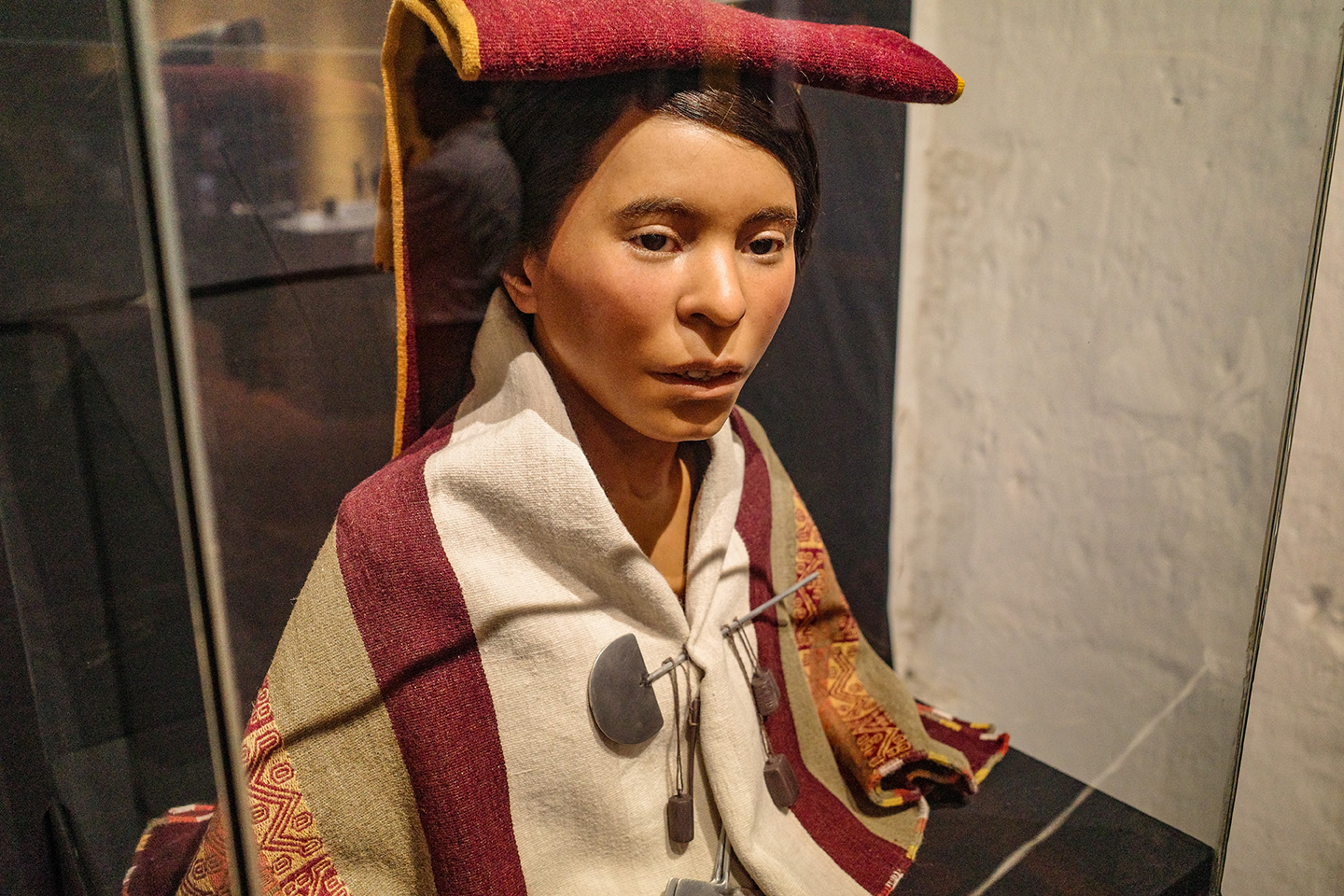
Over the years, scientists recorded details from Momia Juanita’s DNA, as well as the shape of the preserved bones.
Finally, in 2023, the scholars “successfully reconstructed [her] face using a replica of the mummy’s skull, computed tomography (CT) scans of her remains, measurements of her skull, and DNA analysis.” Thanks to this reconstruction, we can see Juanita Mummy likely “had tanned skin, black eyes, and pronounced cheekbones.”
People can view the computer-generated images of her face in this BBC piece. The story also covers the digital reconstruction technology in greater detail.
How Old Was She When She Died?
Using CT scans, archeologists discerned Momia Juanita was 14 or 15 years old when she died. Originally, researchers estimated she was 12-16.
Respect & Preservation: Viewing Juanita Mummy
Researchers continue to learn more from Juanita Mummy. Non-scholars, too, are allowed to observe the ancient Ice Maiden.
Where Can Interested People Visit Mummy Juanita?
People can view her at the Andean Sanctuaries Museum in Arequipa, Peru. The ASM is part of the Catholic University of Santa María.
Interested travelers must purchase a ticket from the museum ahead of time.
Tickets cost PEN 12 or 25 (roughly $3.50 or $7.25) for non-Peruvians. Optional, guided tours are included in the ticket price.
How The Inca Ice Maiden Is Preserved Today
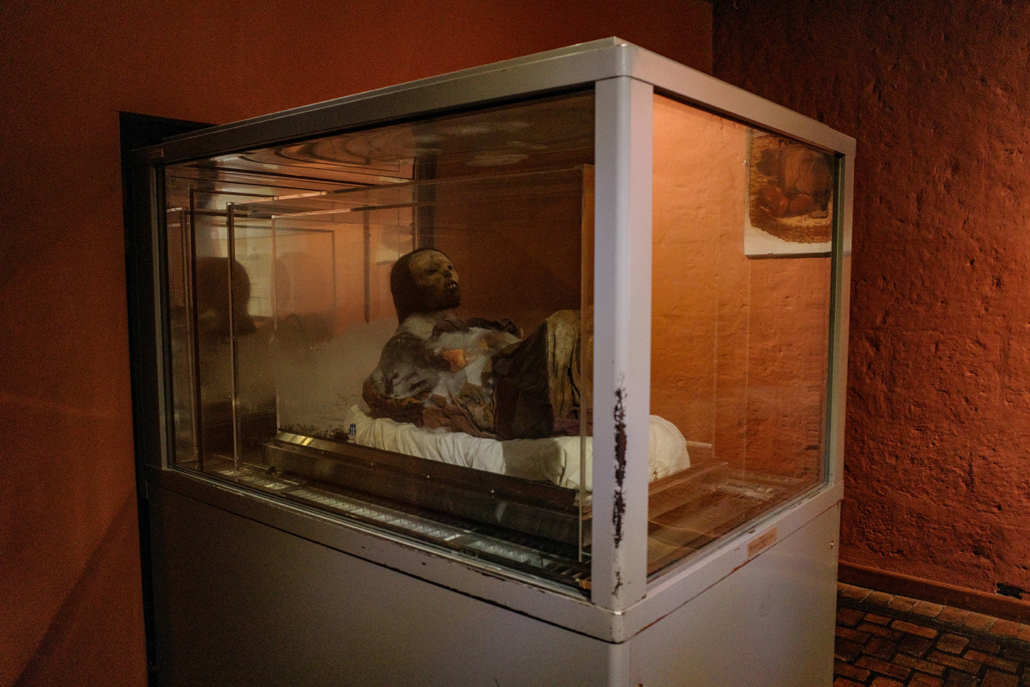
While on display, the Mummy Juanita is preserved in a specialized glass urn.
The interior is vacuum-sealed, and its chamber is kept well below freezing, around -17°C to 19°C (-2.2°F to 1.4°F). Steel profiles and layers of plexiglass sit between the innermost chamber and its exterior.
Juanita’s climate-controlled urn is also precisely humidified. Her atmosphere has just enough vapor to prevent desiccation to dust. Beyond that, it’s dry. This prevents microbial growth.
The Inca Ice Maiden is only on display in the museum from May 1st through December 31st. Outside of those months, the body is put into an even deeper freeze.
How The Andean Sanctuaries Museum Ensures Respect
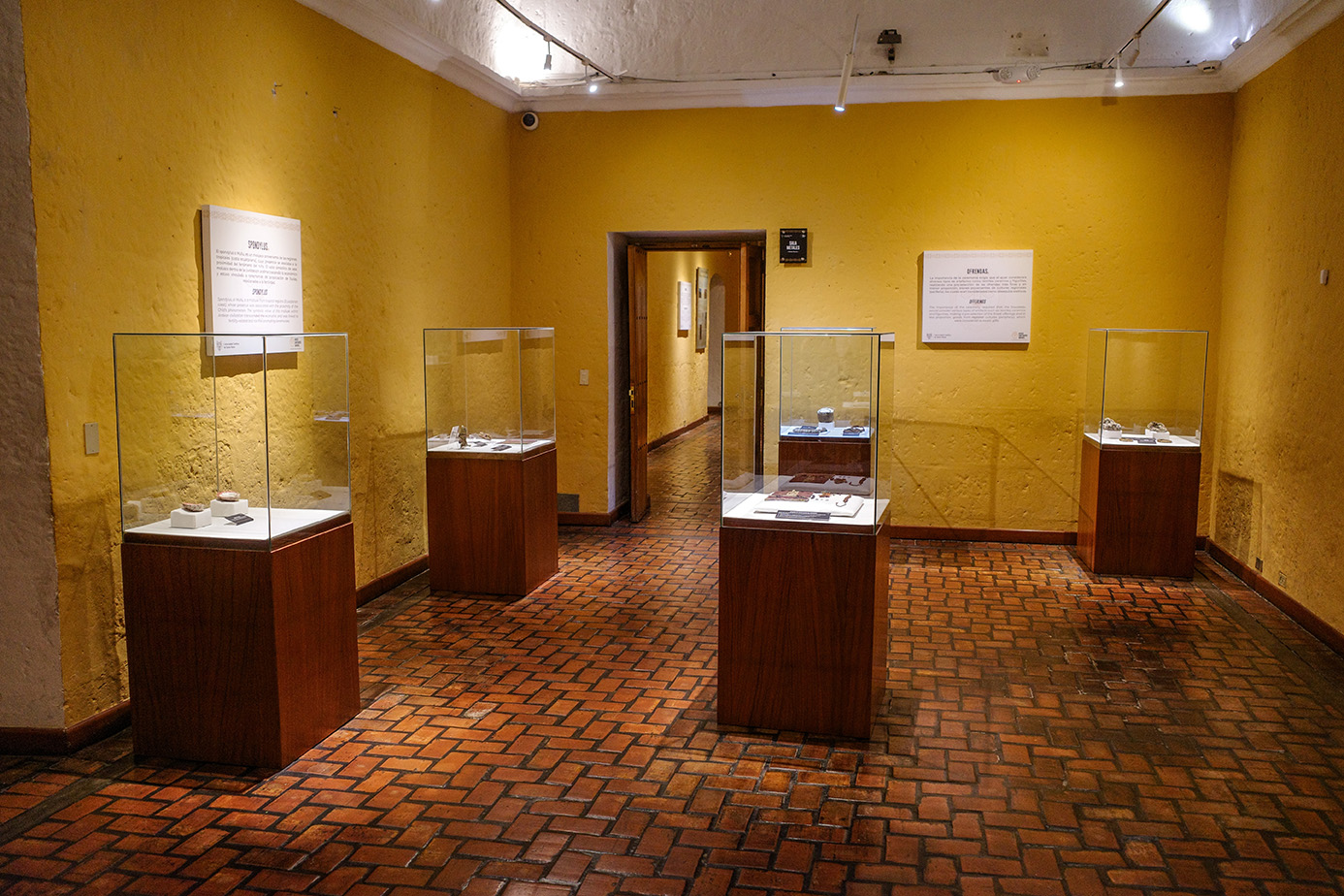
The museum treats Juanita Mummy with respect, and staff work to make sure guests do too.
The museum’s curators explain the thought process behind their displays on ASM’s website:
“The mummies and objects on display are testimonies to a world filled with ancestral wisdom and human sacrifice rituals in religious and ceremonial contexts…
…Each piece tells the story of how ancient Andeans performed rituals to ensure rainfall, fertility, and the protection of their communities, making the museum a unique experience.”
Explore Peru’s Ancient Past With Caravan
Caravan’s eight-day Tour of Peru With Machu Picchu is an all-inclusive trip from Lima to Cusco. Guests enjoy exploring ancient sites, guided museum tours, and so much more.
For more information about Caravan’s tours, call +1-312-321-9800.